
By Carter Bakarich and Dr. David Puder
Other Places to listen: iTunes, Spotify
Awaiting CME Approval
Key points: Wernicke’s encephalopathy at a glance
What it is: Wernicke’s encephalopathy (WE) is a medical emergency caused by thiamine (vitamin B1) deficiency. Untreated, it can progress to Korsakoff syndrome, a lasting memory disorder.
Why it is missed: Only about one third of patients show the classic triad of confusion, eye movement abnormalities and ataxia. In one autopsy series, just 20% of cases had been diagnosed during life.
How to diagnose it: Use the Caine criteria: two of four signs (dietary deficiency, eye signs, cerebellar dysfunction, and altered mental state or mild memory impairment). This rule is about 85% sensitive, versus 23% for the classic triad.
What does not rule it out: A normal MRI or a normal thiamine level. MRI showed lesions in only 63% of alcohol-related cases.
How to treat it: Give parenteral thiamine immediately when WE is suspected, without waiting for tests. UK Royal College of Physicians guidance is 500 mg IV three times daily for 2–3 days, then 250 mg daily. Oral thiamine is not adequate for acute treatment.
Who is at risk besides people with alcohol use disorder: Patients with hyperemesis gravidarum, bariatric surgery, cancer, parenteral nutrition without vitamins, eating disorders, and rapid weight loss or vomiting on GLP-1 receptor agonists such as semaglutide (Ozempic, Wegovy) and tirzepatide (Mounjaro, Zepbound).
Prevention: For high-risk patients starting weight-loss surgery or medication, the American Society for Metabolic and Bariatric Surgery suggests oral thiamine 100 mg daily, beginning at least 2 weeks beforehand.
Can GLP-1 Drugs Like Semaglutide (Ozempic, Wegovy) Cause Wernicke’s Encephalopathy?
GLP-1 Receptor Agonist Pharmacovigilance Data (FAERS) and a Narrative Review
Lev et al., 2026
Pharmacovigilance study plus narrative literature review, using data from the FDA Adverse Event Reporting System (FAERS) to explore instances of WE associated with the use of GLP-1 agonists.
Results
15 reported cases of GLP-1 RA-associated WE (13 from FAERS, 1 published, 1 from the authors’ own center)
Most cases involved semaglutide (n = 8/15) or tirzepatide (6/15)
Disproportionality analysis showed increased reporting of WE with GLP-1 RAs compared with other medications (ROR = 2.35 [95%CI, 1.38–4.01]; IC025 = 0.29).
Gu, 2026
A second FAERS analysis, of tirzepatide alone (2022 Q1 to 2025 Q1)
Results
7 reported cases of WE associated with tirzepatide
Reporting odds ratio 6.7 (95% CI, 3.12–14.24)
Limitations
Causality cannot be inferred from pharmacovigilance studies.
Case Report of T2DM Patient developing WE after semaglutide use (Sheth et al., 2024)
37-year-old male with type 2 diabetes treated with semaglutide. History of polysubstance use, including synthetic cannabinoid (K2) use 2 weeks before admission.
Experienced profound appetite suppression, recurrent nausea, vomiting, and >70 lb (≈32 kg) weight loss over about 3 months.
Presented with:
Dysphagia
Slurred speech
Word-finding difficulty
Headache
Facial weakness
Restricted extraocular movements and bilateral esotropia
Brain MRI demonstrated abnormalities involving the basal ganglia, thalamus, and brainstem consistent with Wernicke encephalopathy.
Treated with intravenous thiamine 500 mg three times daily for three days.
Demonstrated improvement in headaches, facial weakness, and speech deficits following thiamine replacement.
Authors concluded that semaglutide-associated appetite suppression, reduced oral intake, and recurrent vomiting likely led to thiamine deficiency and subsequent Wernicke encephalopathy.
Case Report of obesity patient developing WE after semaglutide (Gras et al., 2025)
49-year-old female with severe obesity treated with semaglutide (Wegovy)
Developed progressive reductions in food intake, eventually eating only one meal per day.
Experienced:
Anorexia
Recurrent vomiting
Loss of taste
Weight loss from 142 kg to 115 kg (19% of baseline body weight)
Subsequently developed:
Confusion
Spatiotemporal disorientation
Ataxia
Bilateral nystagmus
Agitation
Diagnosis supported by:
MRI findings compatible with Wernicke encephalopathy
Low thiamine level below the laboratory's reference range.
Received high-dose thiamine replacement but had only partial neurological recovery with persistent cognitive deficits.
Authors also reviewed the literature and pharmacovigilance databases and identified:
19 reported cases of Wernicke encephalopathy associated with GLP-1 receptor agonists
68% involved nausea, vomiting, or markedly reduced food intake
Weight-loss rates ranged from 3.5-13.3 kg/month over 3-6 months
Case Report of Rapid Weight Loss on Semaglutide presenting with Neuropathy before Encephalopathy (Zahir et al., 2025)
37-year-old female with type 2 diabetes treated with semaglutide.
Lost 45 kg over about 10 weeks accompanied by recurrent vomiting.
Presented sequentially with:
Painful proximal leg weakness that progressed over several weeks
Blurred vision
Upper extremity weakness and urinary retention
Confusion (developing only after the neurological and neuropathic symptoms)
Thiamine treatment led to improvement in mental status, eye movements, and ataxia.
Patient remained largely bedbound with severe neuropathic pain at 6 months follow-up.
Authors noted the peripheral neuropathy may be multifactorial, potentially involving treatment-induced neuropathy of diabetes alongside nutritional thiamine deficiency.
Case Report of Tirzepatide Use without Vomiting Leading to Korsakoff Syndrome (Crelier et al., 2026)
50-year-old male with long-standing heavy alcohol use treated with tirzepatide.
Lost 15 kg in 4 weeks due to marked appetite suppression and reduced oral intake, without persistent nausea or vomiting.
Presented with a 1-week history of severe memory loss, with no ataxia, nystagmus, or ophthalmoplegia.
Initial brain MRI and serum thiamine levels were within normal limits (though oral thiamine had been initiated 5 days prior and serum thiamine may not accurately reflect intracellular thiamine status).
Despite treatment with high-dose intravenous thiamine (500 mg IV every 8 hours), the patient was left with persistent Korsakoff amnesic syndrome.
Key clinical teaching point: Screen for alcohol use prior to starting GLP-1 receptor agonists and do not wait for gastrointestinal symptoms like vomiting before considering thiamine deficiency.
Key Takeaways: GLP-1 Receptor Agonists and Thiamine Deficiency
GLP-1 receptor agonists (semaglutide and tirzepatide) do not directly cause Wernicke's encephalopathy, but rather create risk indirectly through profound appetite suppression, reduced caloric intake, and rapid weight loss
Prolonged nausea and vomiting are major contributors to nutritional compromise and thiamine depletion, though Wernicke-Korsakoff syndrome can develop even in the absence of persistent vomiting.
Neurological symptoms can present unusually, such as painful peripheral neuropathy preceding confusion, or the rapid onset of an irreversible amnestic syndrome (Korsakoff syndrome) without the classic triad of ocular or cerebellar signs.
For patients undergoing weight loss treatment (surgery or medications) who are at high risk of thiamine deficiency, consider giving thiamine 100 mg by mouth daily beginning at least 2 weeks before the weight-loss treatment to reduce risk of WE (Patterson et al., 2025).
A Natural History of Thiamine, Beriberi, and Wernicke’s Encephalopathy
“No animal can live upon a mixture of pure protein, fat and carbohydrate, and even when the necessary inorganic material is carefully supplied, the animal still cannot flourish” (Hopkins, 1906). Sir Frederick Hopkins, co-recipient of the 1929 Nobel Prize in Physiology or Medicine for his discovery of the growth-stimulating vitamins.
Today’s clinicians take for granted the knowledge that the human body requires 13 essential vitamins, organic compounds that must be obtained through the diet because the body cannot synthesize them in sufficient quantities. Our scientific understanding of vitamins is relatively recent, developing primarily over the last century, but our experience with vitamin deficiency diseases is far more ancient. Afflictions like scurvy, rickets, pellagra, and beriberi have been documented for thousands of years, although their relationship to diet was not always understood. Neurological symptoms of dry beriberi -- which include peripheral neuropathy, muscle wasting, ataxia, and confusion -- were described in ancient Chinese medical texts as early as 2697 B.C. The disease was later associated with populations whose diets relied heavily on polished rice, a process that removes the thiamine-rich outer layers of the grain. It would take many centuries for beriberi to be definitively linked to a dietary deficiency of thiamine, or vitamin B1.
Wernicke’s encephalopathy (WE) is another condition caused by thiamine deficiency, described by the German physician Carl Wernicke in 1881. In his account, Wernicke described three patients who developed a rapidly progressive neurological illness characterized by disturbances in consciousness, abnormal eye movements, and impaired coordination. His first patient was a 20-year-old seamstress who developed persistent vomiting and pyloric stenosis after ingesting sulfuric acid. She later developed confusion and visual disturbances before dying. At autopsy, Wernicke observed numerous small hemorrhages in the gray matter surrounding the third ventricle, findings that suggested a distinct neurological disease associated with her gastrointestinal illness and malnutrition.
Wernicke subsequently identified a similar pattern in two men, aged 33 and 36, with histories of heavy alcohol consumption. Both developed disturbances in consciousness and ocular motor abnormalities, accompanied by impaired coordination. Postmortem examinations revealed comparable hemorrhagic lesions in the brain, particularly around the ventricles and other deep neurological structures. Recognizing the similarities among these three cases, Wernicke proposed a distinct disease entity that he called polioencephalitis haemorrhagica superioris, or acute superior hemorrhagic polioencephalitis. Although he initially suspected toxic injury rather than a nutritional deficiency, his observations established the clinical and pathological foundation for what is now known as Wernicke’s encephalopathy.
Timeline
2697 B.C.E. (traditional date) – The Nei Ching, an early Chinese medical text, describes beriberi-like symptoms.
1881 C.E. – Carl Wernicke characterized a neurological disorder with triad of altered mental status, ocular signs, and ataxia
1887 C.E. – Sergei Korsakoff described an amnesic disorder with confabulations
1890 C.E. – Christian Eijkman demonstrated that polished rice produced beriberi-like symptoms in chickens, and that feeding of the removed polishings reversed the disease.
1901 C.E. – Gerrit Grijns correctly proposed that polyneuritis and beriberi were caused by a deficiency of a nutrient found in the rice husks.
1906 C.E. English biochemist Frederick Hopkins identified “Accessory factors” beyond carbohydrates, fats, and proteins in foods which were necessary for maintenance of health.
1912 C.E. – Casimir Funk identified "anti-beriberi factor" present in whole rice, coined "vita-amine"
1926 C.E. – Dutch biochemists Barend Jansen and Willem Donath isolate and purified thiamine from rice bran
1929 C.E. – Hopkins and Eijkman co-awarded nobel prize for their work on growth-stimulating vitamins and antineuritic-vitamins, respectively.
1947 C.E. – De Wardener and Lennox describe “cerebral beriberi” in starved POWs, describing relationship with vitamin B1 Thiamine
Wernicke’s Encephalopathy vs Korsakoff Syndrome: Two Stages of the Same Disease
Wernicke’s encephalopathy (WE) and Korsakoff syndrome (KS) are now understood as acute and chronic stages of a single disease process, collectively known as Wernicke–Korsakoff syndrome (WKS), caused by thiamine (vitamin B1) deficiency. Wernicke’s encephalopathy is the acute, potentially reversible state characterized by a triad of confusion, ocular dysfunction, and gait ataxia. However, all three features occur together in only a minority of patients, making clinical recognition challenging. WE is a medical emergency, and prompt treatment with parenteral thiamine can prevent further neurological injury and, in some cases, reverse symptoms completely.
When thiamine deficiency persists or treatment is delayed, irreversible neuronal injury may lead to Korsakoff syndrome, the chronic phase of WKS. While WE is associated with a confused, hypoactive delirium—a disorder of attention where pausing an interview for 30 seconds can cause the patient's attention to visibly drop away (in one clinician’s experience; Wijnia, 2022)—KS is characterized by a pronounced anterograde amnesia (inability to form new memories), retrograde amnesia that can extend back many years, even decades, disorientation to time, apathy (with general disinterest in ongoing events and little or no spontaneous emotion), and confabulation (involuntary production of fake memories) (Arts et al., 2017). In response to questions, KS patients tend to fill memory gaps with confabulation, whereas patients in whom the Wernicke phase persists chronically more often answer "I don't know" (Wijnia, 2022). Limited awareness of the deficit is typical.
On the ward, a patient with Wernicke-Korsakoff syndrome may need weeks of practice to learn the route from their room to the cafeteria, and a few minutes after a long interview may not recall the interviewer's name or that the meeting happened. In contrast to WE, KS patients often remain alert, with attention, language, and general intellect being relatively spared.
Clinicians should be cautious not to label someone "Korsakoff" too early: formal neuropsychological assessment should wait at least 6 weeks of abstinence (longer if delirium persists), because in the first weeks this is usually still a Wernicke delirium in partial remission, and the final level of functioning occasionally takes more than a year to reach (Wijnia, 2022). While some sources cite the deficits of Korsakoff syndrome as “largely irreversible”, others emphasize that significant, if incomplete, recovery is possible in many patients. Functional daily-living improvements in WKS patients may be supported through the use of structured procedural learning exercises, repeated practice, and external memory aids.
Wernicke Encephalopathy Symptoms: What the 1971 Victor Case Series Showed
Wernicke-Korsakoff Syndrome (Victor et al., 1971) was a highly influential case series studying the clinical and pathological findings of Wernicke-Korsakoff Syndrome (WKS) in hospitalized patients from 1950-1961. Nearly every patient in the study had chronic alcoholism, contributing to the perception of WKS as an alcoholic’s disease.
245 cases
154 males
30-70 y/o (Mean 50 y/o STD 12.5)
Initial presentations
Confusion: 66% of cases
Characterized as hypoactive delirium, reduced activity, or drowsiness.
Confusion may be acute or insidious.
A French series of 61 patients found that the illness began insidiously in 52.5% (Cambier et al., 1977).
May present concurrently with agitation, delirium tremens, or alcoholic hallucinosis.
Ataxia: 51% of cases
Described as staggering gait, wide-based gait, or inability to walk at all.
Ataxia is truncal dominant with limbs relatively spared. Normal finger-to-nose or heel-to-shin testing does not exclude WE.
Complaints of generalized weakness or the inability to walk may conceal specific gait issues in WE patients.
Ocular abnormalities: 40% of cases
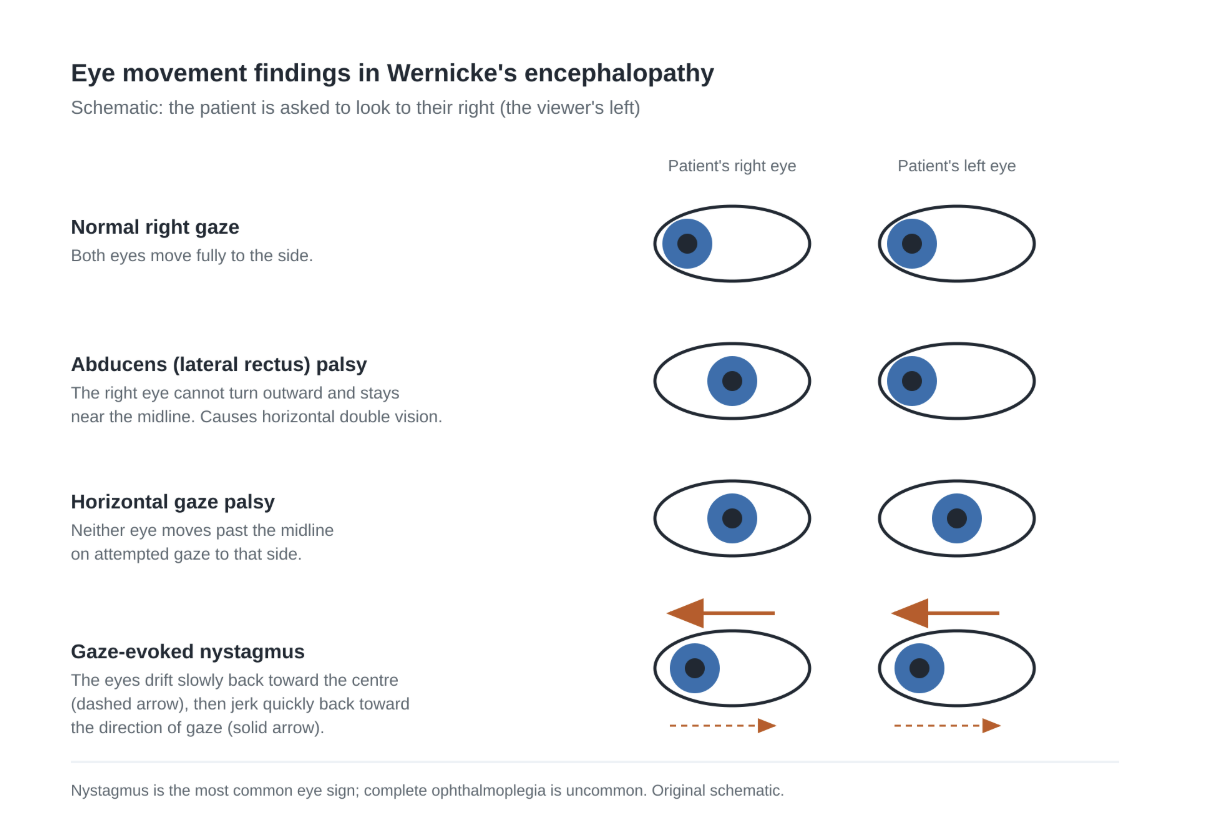
Includes nystagmus, crossed eyes, drooping eyelid, ocular palsies, and loss of vestibulo-ocular reflex (details below)
Nystagmus - Involuntary back and forth oscillation of one or both eyes. Horizontal nystagmus is most common in WE and is evoked by lateral gaze. Can be vertical as well.
Conjugate gaze palsy - Inability to move both eyes together, in the same direction, while maintaining alignment
Horizontal gaze palsy - Inability of one or both eyes to move horizontally.
Ophthalmoplegia - complete inability to move eyes. Eyes are “frozen”.
Vestibulo-ocular reflex - Automatic reflex that keeps eyes steady when head moves. May be impaired in WE.
Assessed via bedside impulse test: the patient fixes on your nose while you make a small, fast head turn to each side; a corrective catch-up saccade (jerky movement) is abnormal.
A case series by Lee et al. (2018) showed that in a series of 17 WE patients, 16 had an abnormal horizontal head-impulse test, while vertical canal function was normal or minimally affected.
Thiamine deficiency can also present with loss of appetite, dizziness, tachycardia and urinary retention (Wijnia, 2022).
Degree of recovery in patients who developed Korsakoff’s psychosis
No recovery: 26%
Slight recovery: 28%
Significant recovery: 25%
Complete recovery: 21%
Key Takeaways
Patients rarely presented with all three parts of the classic triad, so we should not wait for the presence of all three symptoms – confusion, ataxia, and ocular abnormalities – before we diagnose and treat WE.
Meaningful recovery from Korsakoff’s psychosis is possible and diagnosis with WKS should not discourage patients or caregivers from seeking treatment.
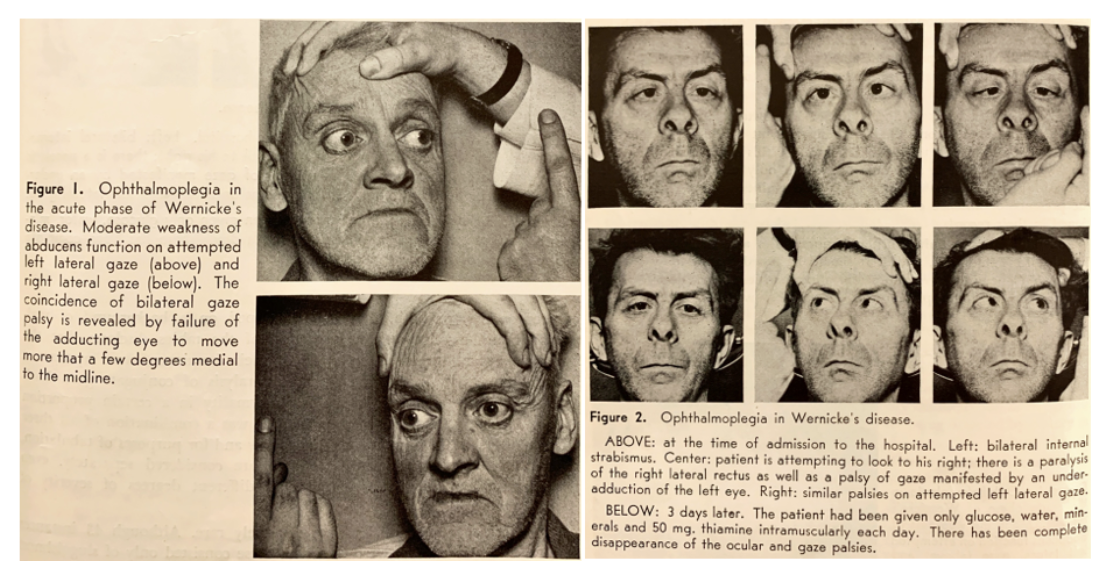
Figures from Victor et al. (1971)
How Often Is Wernicke’s Encephalopathy Missed? Autopsy Studies of Undiagnosed Cases
Incidence of WE
Torvik et al. (1982)
A Norwegian study of 8,735 autopsies showed that 0.8% of the autopsied population had lesions indicative of WE
Harper (1983)
A 9-year Western Australian necropsy study (1973–1981) found 131 cases of WE among 4,677 brains examined, an incidence of 2.8%.
Harper et al. (1998)
Follow-up series comparing prevalence of WE on autopsy after fortification of bread flour with thiamine in Australia. WE prevalence rate was 1.1% in the general autopsied population.
Frequency of Missed WE Diagnosis
Harper et al. (1986)
A followup analysis of 131 WE cases from Harper (1983) focusing on symptomology and diagnosis rates,
Results
20% of patients with WE received the diagnosis during life.
16% of cases presented with the classic triad.
19% had no documented signs and symptoms of WE during life
Relative Rates of WE Among Alcoholics vs. Non-Alcoholics
Harper et al. (1986)
Of the 97 WE patients with adequate clinical records, 94 were alcoholics.
Lindboe and Løberg (1989)
Norwegian study of 52 WE cases diagnosed at autopsy
77% of WE cases occurred in alcoholics
Among the non-alcoholics with active WE disease, clinical recognition of WE was likely made challenging by decreased level of consciousness and comorbid conditions.
Explanations for Missed WE Diagnosis
The fact that only 16% of WE cases present with the classic triad means WE often goes underrecognized by providers.
In alcoholic patients, WE symptoms of confusion or ataxia may be attributed to simple intoxication or delirium tremens.
In psychiatric settings, WE is often misattributed to underlying conditions, dementia, catatonia, or medication side effects, particularly when food refusal or severe weight loss leads to mutism, rigidity, or apathy.
In medical settings, WE can mimic Guillain-Barré or Miller Fisher syndrome (presenting with progressive weakness or areflexia/ophthalmoplegia/ataxia), CNS infections, acute stroke, eclampsia, or metabolic imbalances like hyponatremia.
Pathophysiology of Wernicke’s Encephalopathy: How Thiamine Deficiency Injures the Brain
What Is Thiamine (Vitamin B1)?
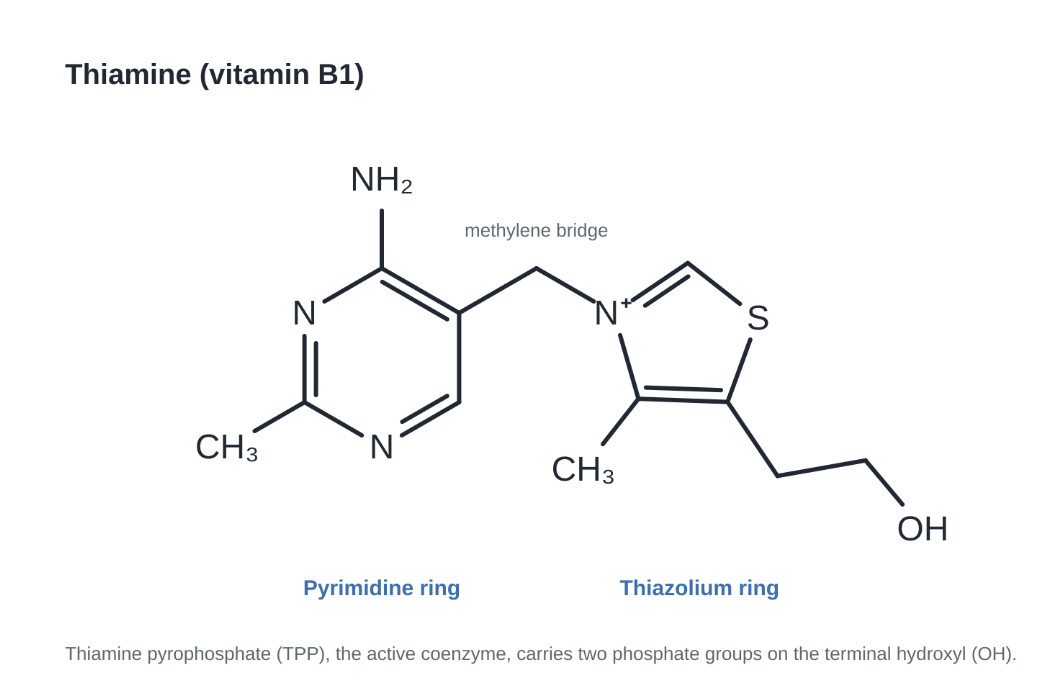
Thiamine (vitamin B1) is a water-soluble B vitamin that the body cannot synthesize and must obtain continuously from the diet. Key sources include enriched cereal grains, yeast, meat, legumes, eggs, and nuts. Dietary thiamine is mostly in a phosphorylated form, which is converted to free thiamine by intestinal phosphatases and then absorbed in the jejunum. Once inside cells, thiamine is phosphorylated by the enzyme thiamine pyrophosphokinase (TPK1) into its biologically active coenzyme form, thiamine pyrophosphate (TPP).
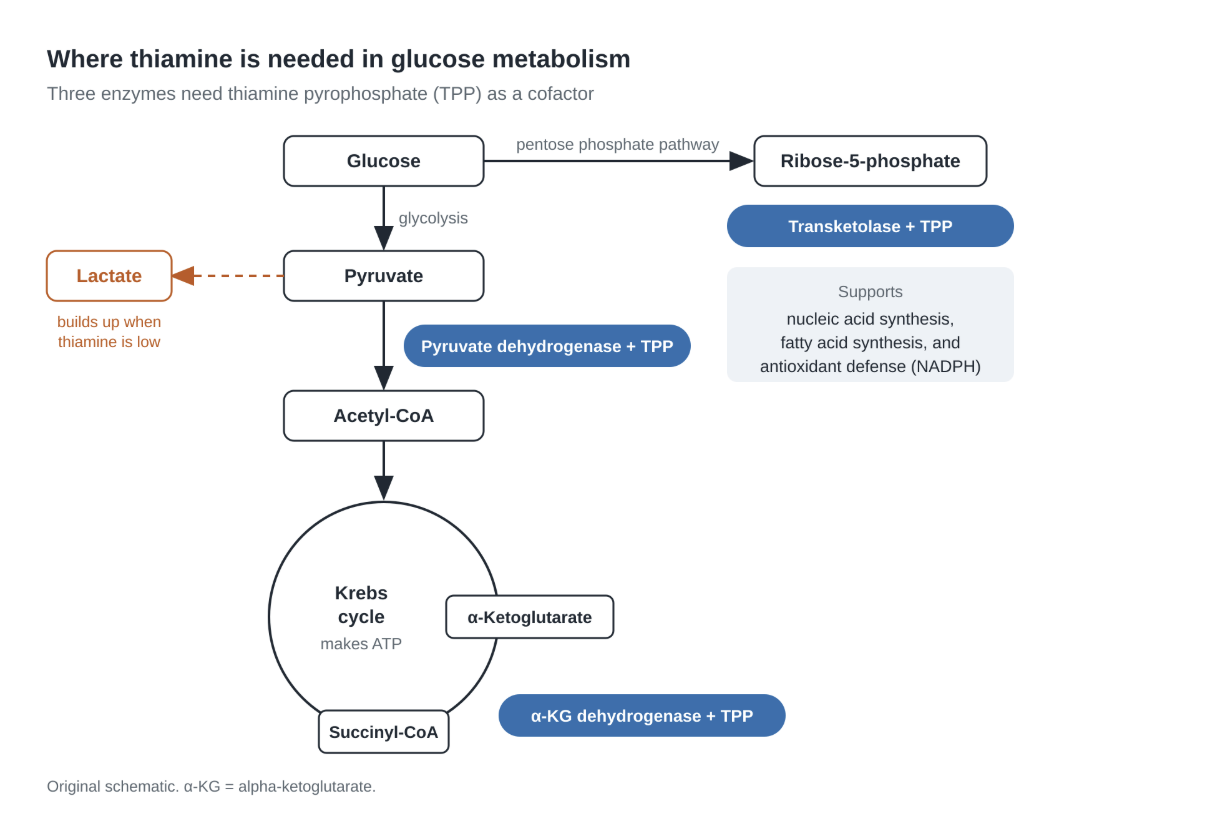
How Does the Body Use Thiamine?
TPP acts as a coenzyme for a small set of enzymes necessary for the metabolism of glucose and production of cellular ATP. These enzymes span glycolysis, the Krebs (citric acid) cycle, and the pentose phosphate pathway. Three critical enzymes are:
Pyruvate Dehydrogenase
Links glycolysis to Krebs cycle
Converts pyruvate → acetyl-CoA
Alpha-ketoglutarate dehydrogenase
Krebs cycle enzyme
Converts alpha-ketoglutarate → succinyl-CoA
Transketolase
Pentose phosphate pathway enzyme
Indirectly supports nucleic acid synthesis, fatty acid synthesis, and neutralization of free radicals
How Much Thiamine Can the Body Store, and How Fast Is It Depleted?
Because thiamine is water-soluble, it is not stored in fat and any excess is excreted in the urine. Thiamine stores are therefore small and short-lived. The total adult body pool is only about 30–50 mg, held in modest amounts in liver, heart, kidney, muscle, brain, and in erythrocytes and plasma (Kohnke & Meek, 2021). Guidelines from the American Society for Metabolic and Bariatric Surgery (ASMBS) state that body thiamine stores can be depleted within as little as 2 weeks of inadequate intake (Patterson et al., 2025). The actual thiamine depletion time is influenced by intake level, absorption, and metabolic demand, but there are reports of patients developing thiamine deficiency symptoms after 9-10 days without eating.
This explains why WE can appear rapidly in settings that limit the intake or absorption of thiamine, such as chronic alcohol use, hyperemesis, bariatric or GI surgery, prolonged vomiting, malignancy, and unsupplemented parenteral nutrition. Notable psychiatric causes of poor intake include food delusions, severe depression, catatonia, anorexia nervosa, hunger strike, and dementia.
Key clinical pearl: For a patient dependent on parenteral nutrition, verify what vitamins were actually supplied and administered, not just that nutrition or a “multivitamin” was prescribed. Reports describe WE when IV vitamins were omitted, oral replacements were not tolerated, or the selected oral product contained no thiamine. Confirm with patients that the supplements they are procuring actually contain thiamine. Severe malabsorption and gastrointestinal losses can make oral replacement unreliable even with reported adherence (Perko et al., 2012; Unhapipatpong et al., 2025).
Why Is the Brain So Vulnerable to Thiamine Deficiency?
The selective vulnerability of brain tissues to thiamine deficiency is largely believed to be the result of relatively increased energy demand. The brain regions damaged in WE – mammillary bodies, the medial (dorsomedial) thalamic nuclei, the hypothalamus, the periaqueductal gray matter, and the structures lining the third and fourth ventricles – share a common feature: unusually high oxidative/glucose metabolism and high thiamine turnover. Neurons have very high energy requirements but little capacity to store high-energy compounds, so when thiamine-dependent ATP production fails, these metabolically active regions are the first to suffer.
Key clinical pearl: Give thiamine promptly alongside glucose or as soon as possible afterward when thiamine deficiency is suspected. Since thiamine is used during the metabolism of glucose, case reports suggest that prolonged glucose administration without thiamine in a thiamine-depleted patient can consume the remaining thiamine and precipitate or worsen WE. (Schabelman & Kuo, 2012). Critically, however, never delay glucose in a hypoglycaemic patient while waiting for thiamine.
Key clinical pearl: Unexplained lactic acidosis in nutritionally at-risk patients should raise suspicion for thiamine deficiency, as thiamine depletion blocks pyruvate from entering the Krebs cycle, leading to elevated lactate levels that may resolve following thiamine repletion.
Recognizing Wernicke’s Encephalopathy: The Classic Triad Is Usually Incomplete
A Modern Systematic Review of WE Case Presentations (Puertas-Miranda et al., 2026)
A meta-analysis characterizing the epidemiology and presentations of WE in cases collected from 12 studies across multiple countries.
Demographics
5,510 total cases studied (mean age 60.7 y/o, 65.4% male)
Epidemiology
Alcoholic WE patients tended to be more male (78.7% male), whereas non-alcoholic patients were roughly gender balanced (52.6% male).
Presentations
Similar to previous estimates, only a third of WE patients present with the classic triad.
Alcoholic patients presented more often with the classic triad (38.3%) compared to non-alcoholic patients (27.1%).
The relative frequency of symptoms was consistent with previous estimates
Altered Mental Status (68.7%)
Ataxia (51.4%)
Ocular abnormalities (48.5%)
In three studies that reported nystagmus specifically, the prevalence of nystagmus was notably higher at 70.9%. The discrepancy between this and overall ocular abnormality incidence is likely due to variance in study methods and attention of examiners to ocular findings.
Seizures (9.2%)
Stupor (7.2%)
Coma (1.7%)
Limitations
Symptom frequencies and demographics derived from a heterogeneous pool of published WE cases, and are not necessarily reflective of all WE patients.
A Swiss Nationwide Study Shows Differences in WE Risk and Outcomes for Alcoholics vs. Non-Alcoholic Patients (Rasiah et al. 2024)
A nationwide retrospective cohort study of hospitalized WE patients in Switzerland from 2012 to 2020.
Demographics
4,393 hospitalizations (median age 61 y/o, 70.8% male)
Key Results
Inpatient incidence rates of WE
5.4 hospitalizations per 100,000 person-years for alcoholic patients
0.4 hospitalizations per 100,000 person-years for non-alcoholic patients
Inpatient Outcomes
Alcoholic WE patients had a lower in-hospital mortality (3.2%) than non-alcohol-related WE patients (8.47%), yielding an adjusted OR of 0.38 [95% CI(0.23-0.62)]
Higher mortality of non-alcoholic WE patients may be due to more serious underlying disease, including cancer, or to later recognition (Rasiah et al., 2024).
Alcoholic WE patients were more likely to progress to Korsakoff syndrome (16.9%) than non-alcoholic WE patients (1.7%), yielding an adjusted OR of 10.64 [95% CI (4.37-25.92)].
Takeaways
Alcohol use disorder remains the most common cause of imbalanced nutrition leading to WE
The clinical course of non-alcoholic WE patients is more often complicated by comorbid conditions
Limitations
The study analyzed risks and outcomes of hospitalized WE cases without controlling for individuals with repeat hospitalizations.
Calculated relative odds ratios for alcoholic and non-alcoholic cases applies to a hospitalized WE population and cannot be neatly extrapolated to a general population.
What Causes Wernicke’s Encephalopathy Without Alcohol? Non-Alcoholic Risk Factors
Sechi & Serra (2007)
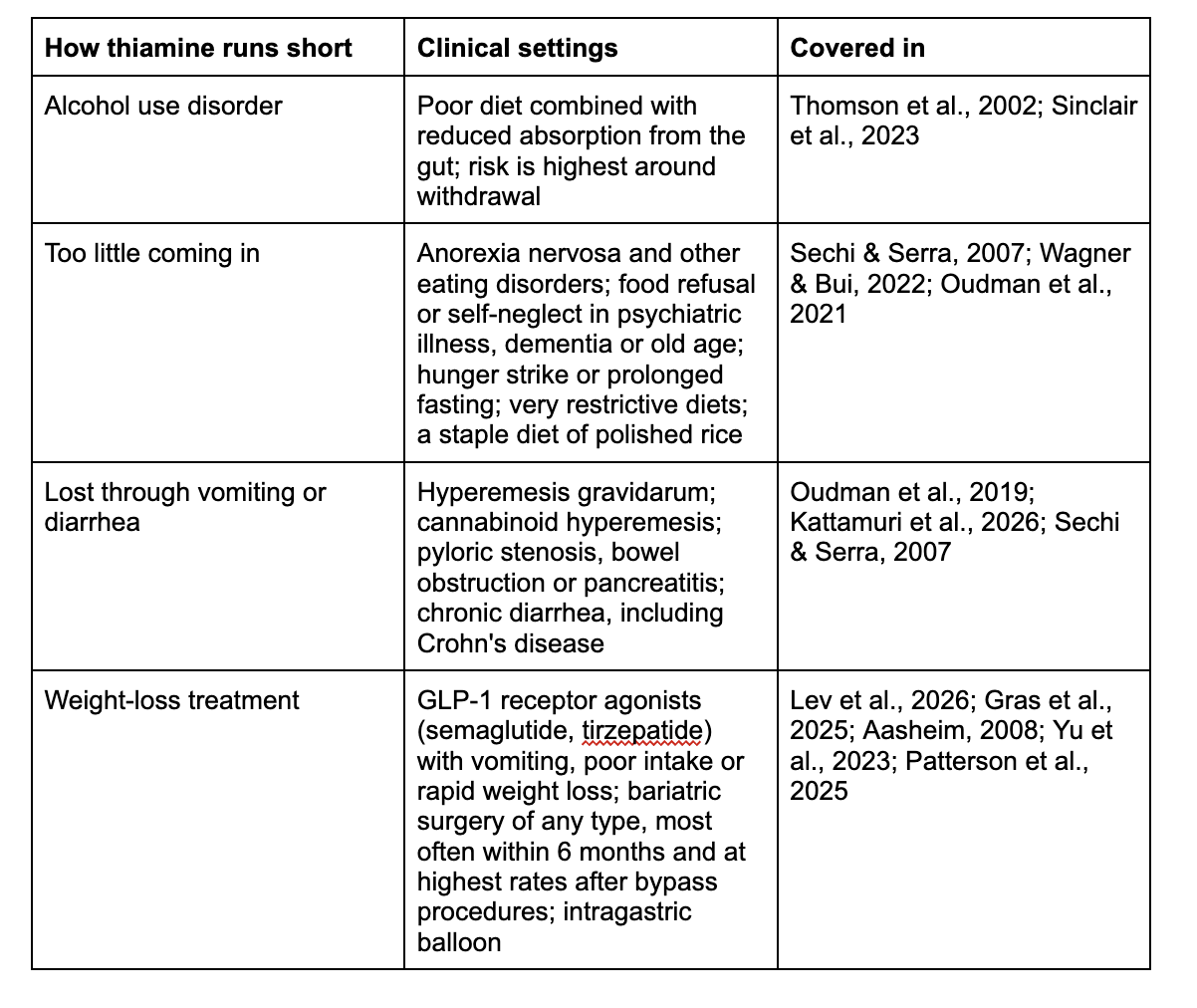
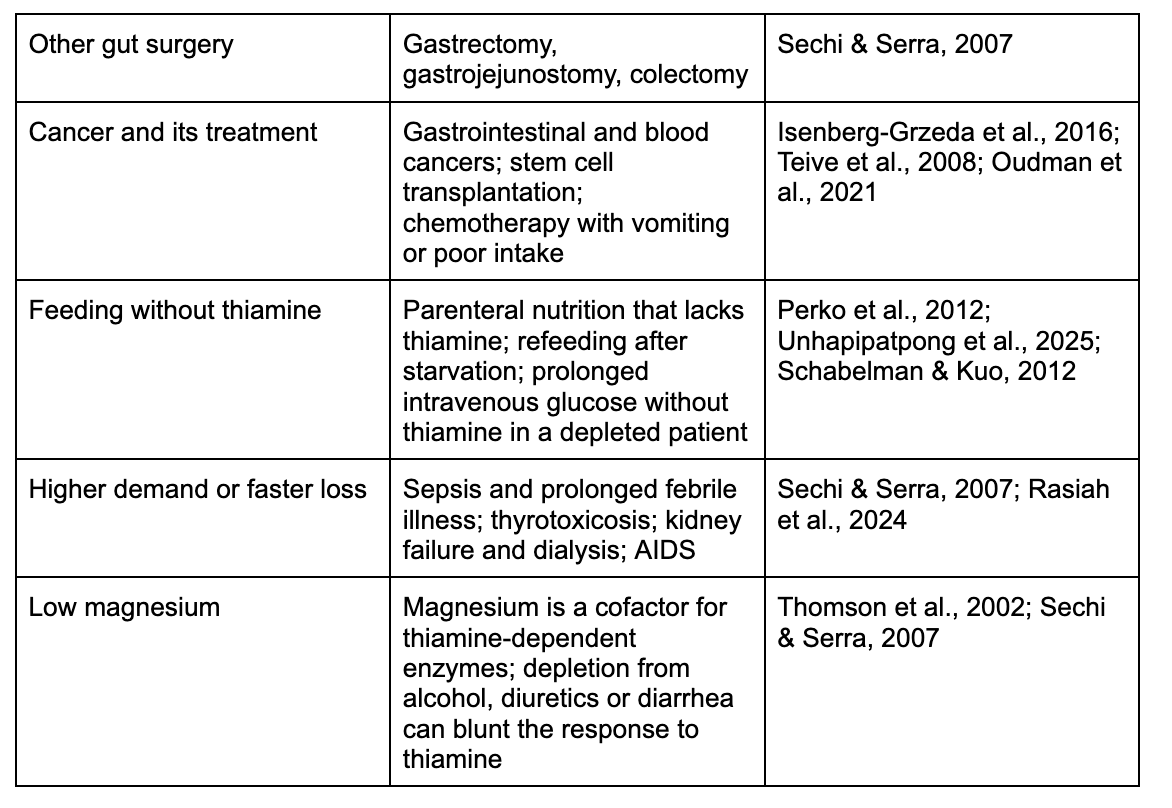
A well cited review published in the Lancet Neurology detailing many of the conditions that can precipitate a Wernicke’s encephalopathy through disruption in bodily thiamine balance. A comprehensive list of conditions is shown in Panel 2, with select conditions outlined below:
Inadequate intake of thiamine
Hyperemesis gravidarum
Starvation or neglect
Thiamine deprived parenteral nutrition or infant formula
Inadequate absorption of thiamine from food
Chronic vomiting/diarrhea
Bariatric surgery
Crohn’s disease
Chronic loss of thiamine
Dialysis without thiamine supplementation
Relative thiamine deficiency due to increased bodily consumption (± adequate intake)
Cancer (malignant cells are metabolically active and consume higher amounts of thiamine)
Refeeding syndromes (increasing carbohydrate metabolism depletes thiamine stores)
Infection (increased bodily demand for thiamine)
Rasiah et al. (2024)
The analysis of comorbidities from Rasiah et al. (2024) helps explain why non-alcoholic hospitalized WE patients had higher rates of mortality.
Non-alcoholic WE patients were more likely than alcoholic WE patients to possess comorbid conditions such as obesity, CAD, A-fib, CHF, CVA, diabetes, and CKD. A high frailty score (Hospital Frailty Score >15 points) was similar in the two groups (6.4% vs 5.7%).
The authors suggest that more serious underlying disease, especially cancer, and later recognition may explain the higher mortality in non-alcoholic patients. Non-alcoholic patients were also more likely to have common nutritional risk factors such non-GI solid tumors, hematological malignancies, and other risk factors (dementia, dialysis, delirium, hyperemesis gravidarum, thyroid disease) (12.5% non-alc. vs 7.1% alc.).
Oudman et al. (2021)
A systematic review of 586 non-alcoholic WE cases, identified prolonged vomiting and extreme weight loss as common risk factors across conditions.
Within the Oudman et al. cases, WE was precipitated by myriad pathologies that included hyperemesis gravidarum (~30% of cases), cancer (~22%), bariatric surgery (~20%), depression, hunger strike, soft drink diet, crohn's disease, and anorexia nervosa.
Wernicke’s Encephalopathy in Hyperemesis Gravidarum: Recognition and Prevention
Oudman et al. (2019)
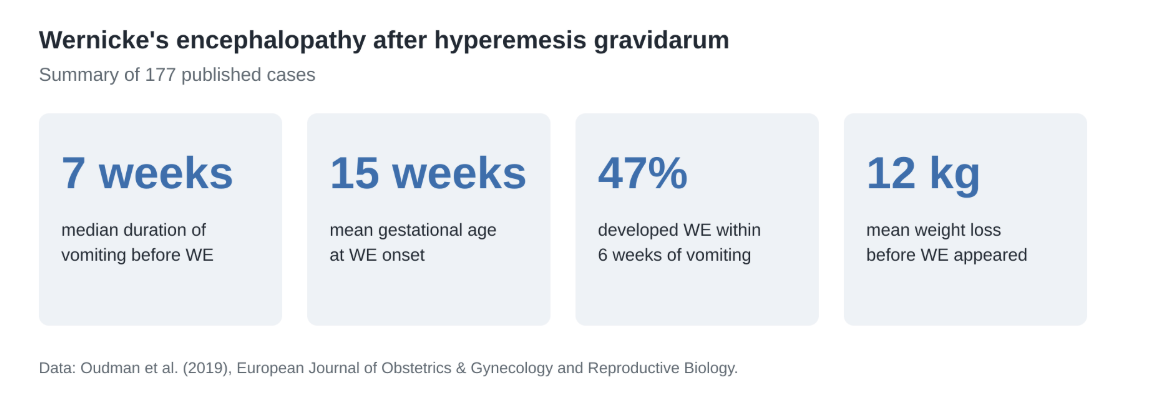
Prolonged vomiting appears to be a particularly relevant risk factor in pregnant women with hyperemesis gravidarum. In a review of WE cases caused by hyperemesis gravidarum, Oudman et al. (2019) reported that patients experienced a median of 7 weeks of vomiting and a mean of 12 kg of weight loss prior to symptom onset.
Key Findings
The onset of WE after hyperemesis gravidarum is variable, but nearly half of patients (47%) developed WE after six or fewer weeks of vomiting.
Notable symptoms included prodromal double vision (37.4%) and blurred vision (27.4%).
50% of cases resulted in loss of the pregnancy
Takeaways
Ocular findings are particularly important for diagnosing hyperemesis WE in younger patients, who more often presented without the characteristic mental status symptoms associated with WE.
The risks of hyperemesis WE extend beyond significant maternal morbidity to include the fetus.
In order to prevent maternal morbidity and loss of pregnancy, clinical suspicion for WE is needed early in the setting of prolonged vomiting. The approximately 7-week latency between hyperemesis and WE onset is demonstrated in Figure 3 from Oudman et al.(2019). Solid line reflects vomiting frequency in uncomplicated pregnancy, with bar charts showing onset of WE symptoms.
Limitations
Oudman et al. (2019) analyzed published cases of WE rather than sampling all at-risk patients. The data is therefore subject to potential case selection biases, publication biases, and inconsistent methodologies of assessing WE.
Wernicke’s Encephalopathy After Bariatric Surgery: Recognition and Prevention
WE is a rare complication of bariatric surgery overall, but worth considering for post-surgical bariatric patients who experience prolonged vomiting on top of an already nutritionally vulnerable state. A Lancet review published by Nuzzo et al. (2021) highlights the importance of managing the nutritional complications of bariatric surgery, particularly as we see rates of such surgeries rise amid recognition of the procedures’ myriad metabolic benefits for obese patients.
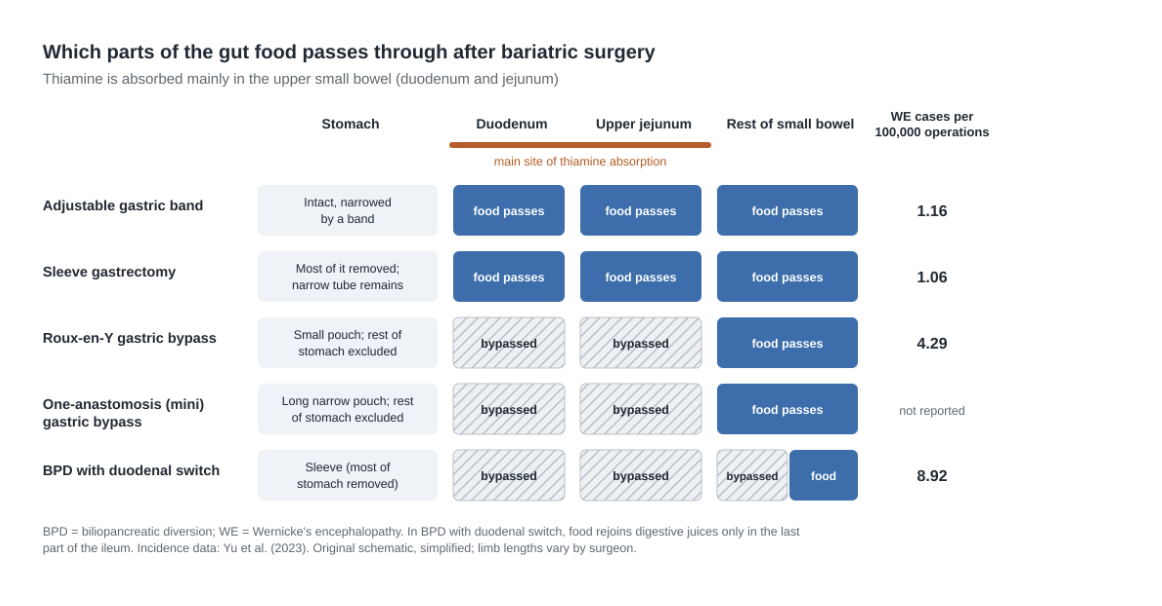
According to an analysis by Karimi Behnagh et al. (2024), the average rate of thiamine deficiency in bariatric patients starts at 7% pre-surgery and increases to 19% at 3 months after a bariatric procedure. The most common of these procedures, according to Nuzzo et al. (2021), are gastric banding, sleeve gastrectomy, and gastric bypasses -- a category including Roux-en-Y gastric bypass (RYGB), mini (one-anastomosis) gastric bypass (MGB-OAGB), and biliopancreatic diversion with duodenal switch (BPD-DS). Reference Figure 1 for anatomical depictions of the procedures.
Patterson et al. (2025)
The American Society for Metabolic and Bariatric Surgery (ASMBS) defines high-risk patients as those with persistent vomiting, or sudden, severe weight loss exceeding the typical early postoperative benchmark of ~8% of total body weight at 3 weeks post-surgery.
ASMBS emergency department guidance: Any patient presenting with poor food intake, rapid weight loss, protracted vomiting, altered mental status, or hemodynamic instability should receive empiric high-dose IV thiamine. For suspected WE, diagnostic labs should be drawn simultaneously with immediate treatment initiation.
Yu et al (2023)
A literature review of WE incidence and risks in the bariatric surgery population that documents the following:
129 cases of WE have been reported after bariatric surgery since 1985
Half of all post-bariatric WE cases are associated with the Roux-en-Y gastric bypass procedure.
The trend is explainable by the fact that RYGB procedures bypass chyme beyond the proximal jejunum, which is where a majority of thiamine is absorbed intestinally.
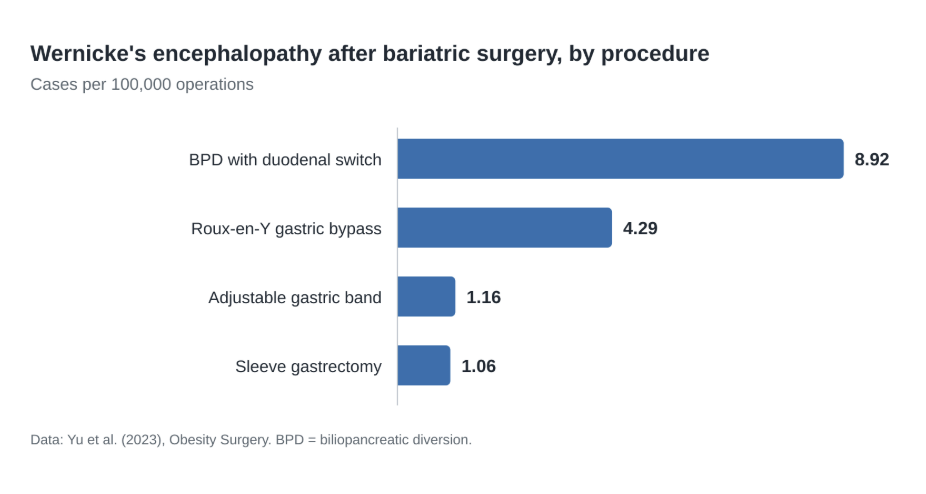
The incidence of WE was lowest in sleeve gastrectomy (1.06 per 100,000) and highest in BPD-DS procedures (8.92 per 100,000), with Roux-en-Y gastric bypass in the middle at 4.29 per 100,000)
Aasheim (2008)
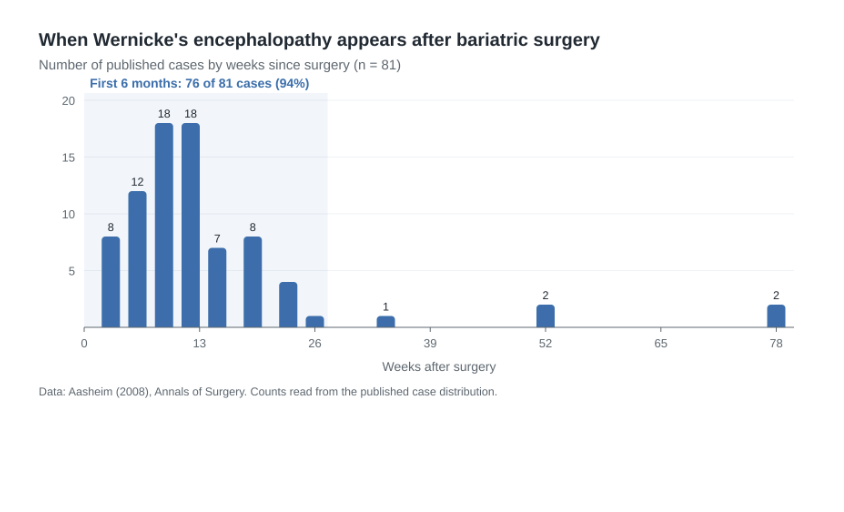
A systematic review of post-bariatric surgery WE cases with focus on symptomology and timing of WE onset.
Demographics
84 cases (of 104 reported)
Mean age 32 y/o (14-55)
82% Female
Key Findings
90% of cases had recurrent vomiting, with duration of vomiting lasting a median of 21 days (range 4-90 days).
Onset of WE symptoms typically occurred within the first 6 months post surgery. The distribution of symptom onset is visualized in Figure 2, shown below.
Why Early Thiamine Matters: Delayed Diagnosis and Undertreatment of Wernicke’s Encephalopathy
As discussed in the preceding sections, WE is an acute medical crisis associated with significant morbidity and a higher than expected prevalence in the general population. We know that the classic triad will often not be present and that proper diagnosis of WE may be challenged by non-specific symptoms and a crowded field of differentials. The expanding accessibility of weight loss treatments only increases the need of clinicians to quickly identify and manage WE in diverse populations. Recent research shows that the stakes for WE patients is high.
Novo-Veleiro et al., 2023
A multicenter retrospective study showed that delay in WE diagnoses (>24hr after hospitalization) was associated with higher rates of failed recovery [OR=1.93, 95% CI (1.05–3.53), p = 0.03].
The same study concluded that prompt treatment with thiamine within 48h of WE diagnosis was significantly associated with increased recovery. It is interesting that a similar analysis for the thiamine dose and route of administration did not show significant effects on patient recovery.
However, only 20.9% of the 373 patients treated within 48 h of diagnosis received an appropriate dose of >300mg/day thiamine within 48h of diagnosis, underscoring the undertreatment of WE even in patients that received a diagnosis.
Sinclair et al. (2023)
Psychiatric wards contain documented gaps in the screening and treatment of WE, as demonstrated by the Sinclair et al (2023) clinical audit of medically assisted alcohol withdrawal (MAAW) in the UK.
Disparities in WE screening and treatment by addiction specialist vs. non-specialists
The audit reported that addiction specialists trained for MAAW were significantly more likely [67%; 95% CI (51%–83%)] to screen alcohol withdrawal patients for all three signs of WE than non-specialists [19%; 95% CI (16%–21%)].
Specialists were also significantly more likely [79%; 95 CI (65%-93%)] to prescribe parenteral thiamine for MAAW patients than non-specialists [41%; 95 CI (38%-44%)].
The authors suggest that lack of awareness of WE and management protocols is one possible cause for lower rates of WE screening and treatment by non-specialists.
How Is Wernicke’s Encephalopathy Diagnosed? Caine Criteria, MRI, and Thiamine Levels
Caine Criteria for Wernicke’s Encephalopathy: Two of Four Signs
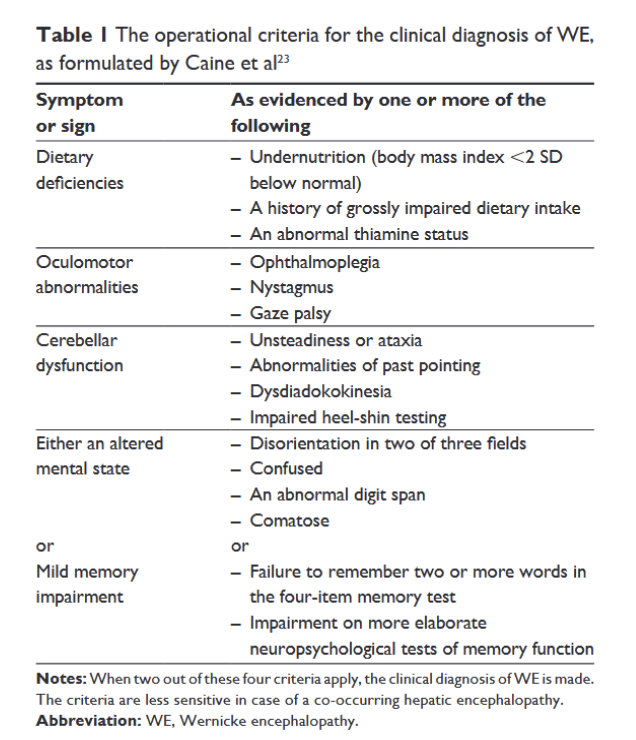
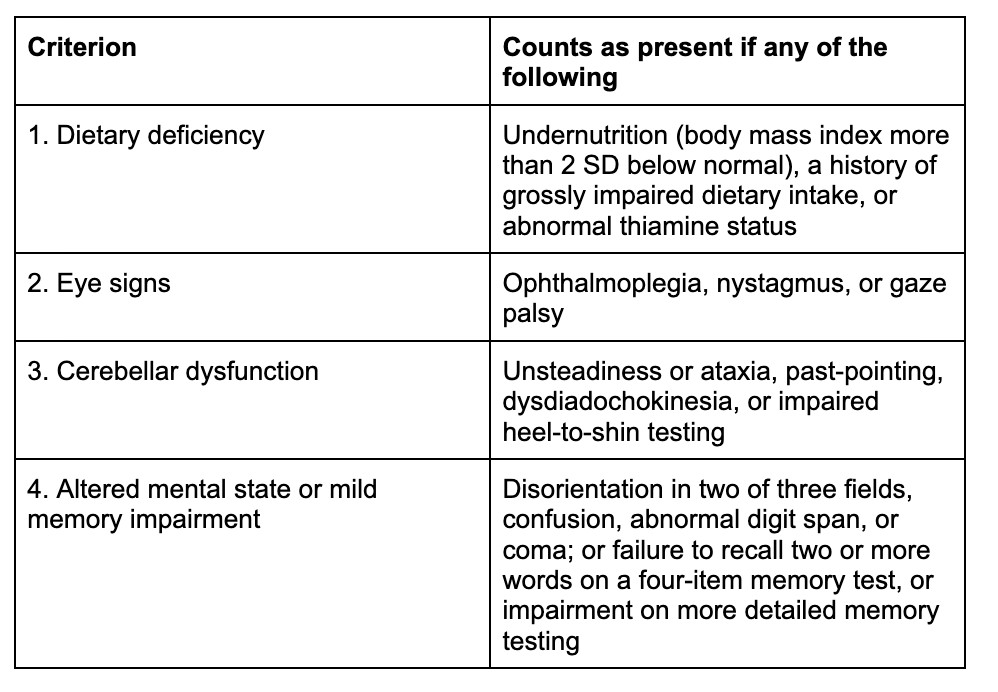
The Caine Criteria
Definition
“The clinical diagnosis of WE in alcoholics requires two of the following four signs; (i) dietary deficiencies, (ii) eye signs, (iii) cerebellar dysfunction, and (iv) either an altered mental state or mild memory impairment” (Galvin et al. 2010)
(Galvin et al. 2010)
Rationale
Caine et al. proposed the criteria as a reoperationalization of the original triad to allow WE diagnosis with only 2 signs/symptoms and include dietary deficiency as a significant factor for disease risk.
Benefits
Caine criteria are superior to the classic triad and lead to fewer missed diagnoses, with a sensitivity of 85% for the two-of-four rule (Galvin et al., 2010).
For comparison, the classic triad is reported to be only 23% sensitive (Galvin et al., 2010)
Limitations
The Caine criteria are validated for use only in alcoholic patients, and lack accuracy data for use in diagnosing non-alcoholic WE. Due to the shared etiology of alcoholic and non-alcoholic WE as functional thiamine deficiencies, however, Caine criteria are generally considered applicable to non-alcoholic patients as well (Galvin et al., 2010)
Diminished sensitivity (~50%) in patients who have co-occurring hepatic encephalopathy (Sechi and Serra, 2007; Caine et al., 1997)
Can MRI Rule Out Wernicke’s Encephalopathy?
MRI results can support a diagnosis of WE by identifying brain lesions – of the mammillary bodies, the medial (dorsomedial) thalamic nuclei, the hypothalamus, the periaqueductal gray matter, and the structures lining the third and fourth ventricles – that are consistent with WE.
MRI cannot, however, be used to rule out WE in a symptomatic patient. The reasons relate to its low sensitivity in detecting characteristic WE brain lesions, particularly in alcoholic populations. Pooled data from the European Federation of Neurological Societies (EFNS) showed that conventional MRI showed lesions in only 63% (59 of 93) of alcoholics with clinically verified acute WE. Conventional MRI performed much better in non-alcoholic populations, correctly identifying WE lesions in 99% (76 of 77) of cases (Galvin et al., 2010).
A 2014 review by Manzo et al. (2014) concluded that non-alcoholic WE patients more frequently present with lesions in atypical locations, such as the cerebellum, cranial nerve nuclei, and cerebral cortex. The authors suggest that contrast enhanced MRI (using gadolinium contrast) is helpful in identifying lesions in patients whose conventional MRI results are unremarkable.
Another challenge is that MRI signals and lesion sites are not entirely specific for WE, and differential diagnoses must be considered even when MRI shows lesions typically consistent with WE. Sechi and Serra (2007) notes some of these differential conditions as “paramedian thalamic infarction (top-of-the-basilar syndrome), ventriculoencephalitis, Miller-Fisher syndrome, primary cerebral lymphoma, Behçet’s disease, multiple sclerosis, Leigh’s disease, variant Creutzfeldt-Jakob disease, paraneoplastic encephalitis, severe hypophosphataemia, acute intoxication from methyl bromide, and chronic intoxication from bromvalerylurea”.
Thiamine Blood Tests: Why a Level Should Not Delay Treatment
As noted by Sechi and Serra (2007), there is no routine laboratory test for Wernicke’s encephalopathy. Whole-blood or erythrocyte thiamine diphosphate (ThDP/TPP) serves as a biomarker of thiamine status that can suggest deficiency and support a diagnosis, but these assays are not universally available. When ordering a level, whole-blood thiamine diphosphate should be requested rather than plasma or serum thiamine, as about 80% of blood thiamine resides in red blood cells and plasma levels merely reflect recent intake rather than total body stores. Additionally, blood samples must be drawn prior to the initial thiamine dose – to avoid falsely elevated results – and protected from light. Direct HPLC measurement of thiamine and its phosphate esters in blood remains the preferred technique over the older erythrocyte transketolase assay. Most importantly, laboratory testing for thiamine levels is far too slow to guide acute clinical decision-making, and a normal result does not exclude the condition; therefore, emergency parenteral treatment for suspected Wernicke’s encephalopathy must never be delayed while awaiting laboratory confirmation.
Wernicke’s Encephalopathy Treatment: IV Thiamine Dosing
Thiamine Dose for Suspected Wernicke’s Encephalopathy
500 mg thiamine hydrochloride by IV three times daily for 2-3 days, then 250 mg IV/IM daily for 5 days or until clinical improvement stops. 500mg thiamine to be diluted in 100ml saline and given over 30 minutes. If no response is seen, treatment should be stopped and other diagnoses considered (Thomson et al., 2002, Royal College of Physicians guideline).
This regimen represents expert consensus guidance rather than a dose established as superior in a definitive clinical trial.
A Cochrane systematic review by Day et al. (2013) noted that high-quality randomized trial evidence remains insufficient to establish the optimal dose, dosing frequency, route, or duration of thiamine for either the prevention or treatment of Wernicke’s encephalopathy (WE).
A dose-ranging randomized controlled trial in symptomatic patients (n = 127) compared 100 mg, 300 mg, and 500 mg IV three times daily for 5 days; it found no statistically significant difference in outcomes, but was limited by early termination, a 38% loss to follow-up, and the exclusion of critically ill patients (Dingwall et al., 2022).
The single trial suitable for Cochrane meta-analysis evaluated 107 alcohol-dependent patients without overt WE who received 5 mg, 20 mg, 50 mg, 100 mg, or 200 mg IM daily for 2 days, finding that the 200 mg dose led to significantly greater improvements on working memory tests compared to the 5 mg dose (Day et al., 2013).
Despite limited trial data, substantial clinical experience and observational evidence support the efficacy of parenteral thiamine in treating WE.
The lack of randomized controlled trials is largely due to ethical constraints, as withholding or underdosing thiamine in placebo-controlled designs would expose patients with confirmed WE to significant, preventable risk of morbidity and mortality.
Following thiamine administration, nystagmus and ophthalmoplegia typically resolve within hours to days, while ataxia and mental status changes can take weeks to months (Thota & Rudinsky, 2017).
Clinical Pearl: If a patient shows no response or suffers a clinical relapse, verify that thiamine was administered parenterally at the complete recommended dose, and evaluate and correct serum magnesium levels. Avoid stepping down therapy prematurely. If confusion persists after eye signs normalize, consider concurrent pellagra. If symptoms still fail to improve, re-evaluate the primary diagnosis.
Why oral thiamine is insufficient for acute treatment
Intestinal thiamine transport is an active, saturable process (though some sources contest this claim). A single oral dose yields a maximum absorption of approximately 4.5 mg, with saturation occurring at roughly 30 mg; thus, a 100 mg oral dose three times daily provides only about 13.5 mg daily in a healthy gut.
In heavy drinkers, underlying intestinal mucosal damage and malnutrition can reduce absorption by up to 70%. Consequently, only the high serum concentrations achieved through parenteral administration can drive thiamine across the blood-brain barrier via passive diffusion at rates necessary to treat acute encephalopathy (Thomson et al., 2002).
Oral prophylaxis can fail in severe starvation states.
A hunger striker developed WE and permanent Korsakoff syndrome despite receiving 450 mg daily of oral thiamine starting on day 14 of her 237 day strike (Wagner & Bui, 2022).
Clinical Pearl: Oral thiamine must not replace immediate parenteral therapy when acute WE is suspected, particularly in the presence of persistent vomiting, malabsorption, or alcohol-related GI impairment. Nutritional rehabilitation and ongoing oral supplementation are essential for long-term management, but they cannot substitute for initial emergency parenteral repletion.
Why Expert Thiamine Doses Exceed the FDA-Labeled Dose
The FDA-labeled dose for thiamine hydrochloride is 100 mg IV, followed by 50-100 mg IM daily until the patient eats a regular, balanced meal.
This is substantially lower than contemporary expert recommendations for the treatment of WE.
Dosing is guided by clinical experience and the appreciation that the risks of undertreating WE vastly outweigh the risks of overtreatment with thiamine
Sechi and Serra (2007) note that doses of 100-250 mg/day may fail to restore vitamin status, reverse clinical signs, or prevent death.
Why Give Thiamine Three Times Daily (TID)?
Pharmacokinetic study by Tallaksen et al. (1993) showed that free thiamine in the blood has a half-life of 96 minutes; a short half-life is the usual rationale given for TID dosing (Galvin et al., 2010).
Is High-Dose IV Thiamine Safe? Anaphylaxis and Injection-Site Reactions
Wrenn et al. (1989)
Study demonstrating acute safety of thiamine hydrochloride through administration of 100mg boluses to 989 patients.
11 patients had transient local irritation
1 patient had generalized pruritus
Aldhaeefi et al. (2022)
Single center study evaluating rates of anaphylaxis and injection site reactions in patients receiving 500mg parenteral thiamine.
Demographics
69 patients (receiving a total of 463 500mg IV doses)
62% male
Median (IQR) age 60 y/o (53.5-65.5)
Results
500 mg IV push of thiamine was not associated with any anaphylactic events and was associated with a low injection site reactions (0.86%)
For reference, UK reports from 1970 to 1988 for an older parenteral B-vitamin product gave about 4 anaphylaxis reports per million pairs of IV ampoules and 1 per 5 million IM. Most reactions followed repeated rapid IV push, so the guideline advises diluting in 100 mL saline over 30 minutes with resuscitation equipment available. The risk does not justify withholding treatment for suspected WE (Thomson et al., 2002).
Thiamine Prophylaxis: Preventing Wernicke’s Encephalopathy in At-Risk Patients
The systematic review by Day et al. (2013) reports that for WE prophylaxis, as with WE treatment, “recommendations about dosage and duration of thiamine treatment are acknowledged to be arbitrary”. Guidelines are, however, offered by many medical societies and helpful in creating consistency of practice.
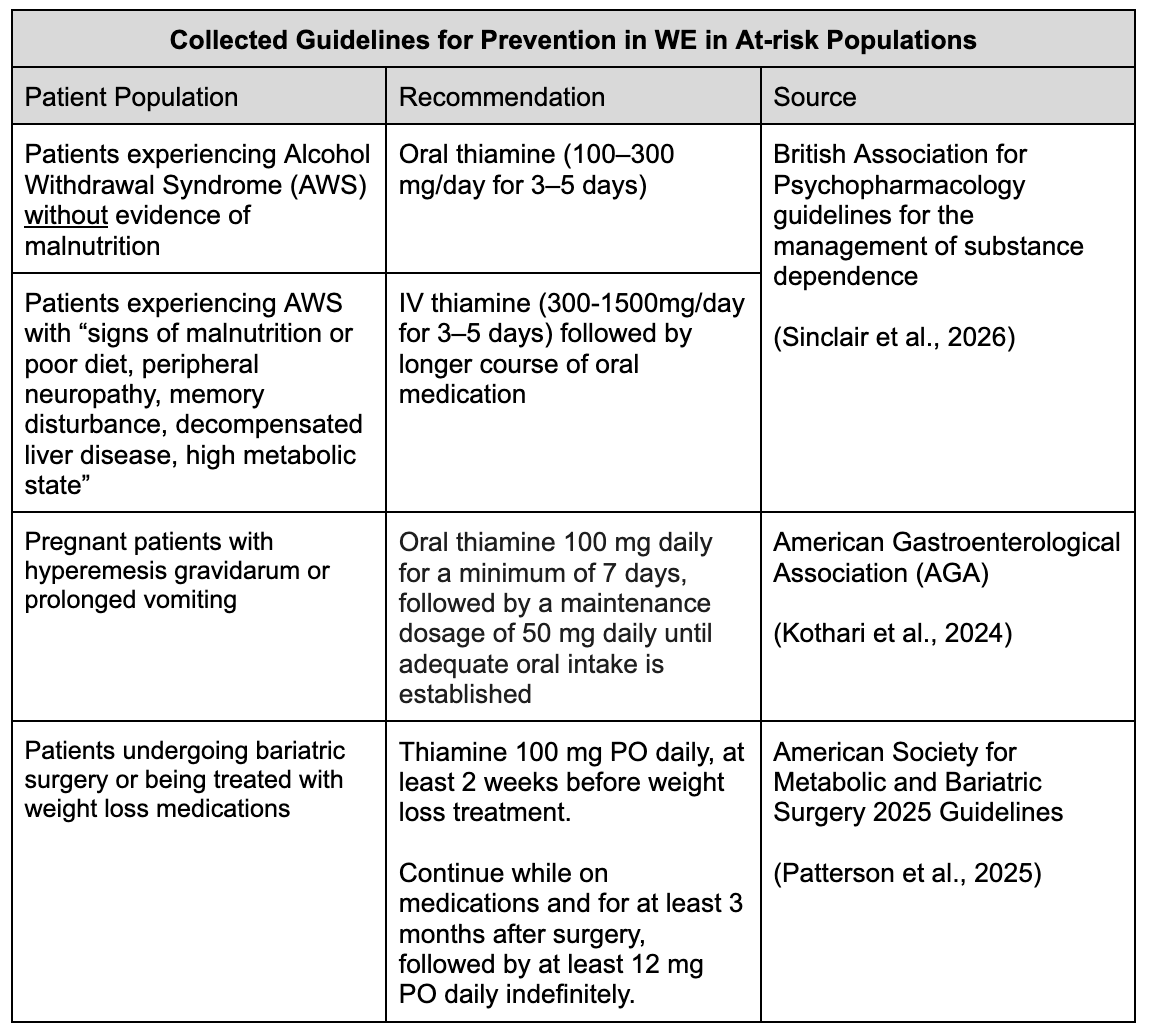
Citations:
Aasheim, E. T. (2008). Wernicke encephalopathy after bariatric surgery: A systematic review. Annals of Surgery, 248(5), 714–720. https://doi.org/10.1097/SLA.0b013e3181884308
Ahmed, S., Akadiri, T. V., Ata, S., & Ayub, S. (2021). An unusual presentation of catatonia in non-alcoholic Wernicke encephalopathy. Cureus, 13(1), Article e12537. https://doi.org/10.7759/cureus.12537
Akashi, Y., Suzuki, H., Kanemoto, K., Hirose, Y., Yamashita, K., Yamamoto, T., Miyazawa, T., Hirose, K., Ishikawa, H., & Maeno, T. (2018). Thiamine concentrations in newly hospitalized elderly patients with infectious diseases at a community hospital in Japan. Journal of Nutritional Science and Vitaminology, 64(3), 209–214. https://doi.org/10.3177/jnsv.64.209
Aldhaeefi, M., McLaughlin, K., Goodberlet, M., & Szumita, P. (2022). Evaluation of the safety of 500 mg intravenous push thiamine at a tertiary academic medical center. Science Progress, 105(2), Article 00368504221096539. https://doi.org/10.1177/00368504221096539
Alligier, M., Borel, A. L., Savey, V., Rives-Lange, C., Brindisi, M. C., Piguel, X., Nocca, D., Monsaingeon-Henry, M., Montastier, E., Beliard, S., Bossu Estour, C., Verkindt, H., Coupaye, M., Lemoine, A., Pierre, A., Laville, M., Disse, E., & Bétry, C. (2020). A series of severe neurologic complications after bariatric surgery in France: the NEUROBAR Study. Surgery for Obesity and Related Diseases, 16(10), 1429–1435. https://doi.org/10.1016/j.soard.2020.05.031
Amoo, W. A., Sultana, M., & Slavska, M. (2026). Refeeding syndrome complicated by Wernicke's encephalopathy following severe hyperemesis gravidarum and medical management of miscarriage: A case report. Cureus, 18(6), Article e110587. https://doi.org/10.7759/cureus.110587
Amrein, K., Ribitsch, W., Otto, R., Worm, H. C., & Stauber, R. E. (2011). Severe lactic acidosis reversed by thiamine within 24 hours. Critical Care, 15(6), Article 457. https://doi.org/10.1186/cc10495
Antunez, E., Estruch, R., Cardenal, C., Nicolas, J. M., Fernandez-Sola, J., & Urbano-Marquez, A. (1998). Usefulness of CT and MR imaging in the diagnosis of acute Wernicke’s encephalopathy. American Journal of Roentgenology, 171(4), 1131–1137. https://doi.org/10.2214/ajr.171.4.9763009
Arts, N. J., Walvoort, S. J., & Kessels, R. P. (2017). Korsakoff’s syndrome: A critical review. Neuropsychiatric Disease and Treatment, 13, 2875–2890. https://doi.org/10.2147/NDT.S130078
Babu, H. M., Spiro, A. J., Hoang, T. D., & Shakir, M. K. M. (2025). Micronutrient deficiency and Wernicke's encephalopathy in the setting of over the counter transcutaneous multivitamin patch use following bariatric surgery. AACE Clinical Case Reports, 11(1), 36–39. https://doi.org/10.1016/j.aace.2024.10.001
Benameur, K., & Clarke, K. (2025). Thiamine deficiency masquerading as Guillain-Barré syndrome. Cureus, 17(1), Article e78310. https://doi.org/10.7759/cureus.78310
Boopathy, D., Grahf, D., Ross, J., Hawatian, K., Rammal, J. A., Alaimo, K., & Miller, J. B. (2025). Thiamine deficiency is common and underrecognized in emergency department oncology patients. Journal of Clinical Medicine, 14(1), Article 257. https://doi.org/10.3390/jcm14010257
Caine, D., Halliday, G. M., Kril, J. J., & Harper, C. G. (1997). Operational criteria for the classification of chronic alcoholics: Identification of Wernicke’s encephalopathy. Journal of Neurology, Neurosurgery, and Psychiatry, 62(1), 51–60. https://doi.org/10.1136/jnnp.62.1.51
Calderón-Ospina, C. A., & Nava-Mesa, M. O. (2020). B Vitamins in the nervous system: Current knowledge of the biochemical modes of action and synergies of thiamine, pyridoxine, and cobalamin. CNS Neuroscience & Therapeutics, 26(1), 5–13. https://doi.org/10.1111/cns.13207
Cambier, J., Dairou, R., & Gonce, M. (1977). Encephalopathie de Gayet-Wernicke. Journal of the Royal College of Physicians of London, 12(1), 21–29. https://doi.org/10.1016/s0035-8819(25)02974-5
Chamorro, A. J., Rosón-Hernández, B., Medina-García, J.-A., Muga-Bustamante, R., Fernández-Solá, J., Martín-González, M.-C., Seco-Hernández, E., Novo-Veleiro, I., Suárez-Cuervo, C., Mateos-Díaz, A. M., Monte-Secades, R., Machado-Prieto, B., Puerta-Louro, R., Prada-González, C., Fernández-Rial, Á., Sabio-Repiso, P., Vázquez-Vigo, R., Antolí-Royo, A.-C., Gomila-Grange, A., … Laso, F.-J. (2017). Differences between alcoholic and nonalcoholic patients with Wernicke encephalopathy: A multicenter observational study. Mayo Clinic Proceedings, 92(6), 899–907. https://doi.org/10.1016/j.mayocp.2017.02.019
Chiappetta, S., & Stein, J. (2016). Refeeding syndrome: An important complication following obesity surgery. Obesity Facts, 9(1), 12–16. https://doi.org/10.1159/000442534
Cocksedge, K. A., & Flynn, A. (2014). Wernicke-Korsakoff syndrome in a patient with self-neglect associated with severe depression. JRSM Open, 5(2), Article 2042533313518915. https://doi.org/10.1177/2042533313518915
Cogan, D. G., & Victor, M. (1953). Ocular signs of Wernicke's disease. Transactions of the American Ophthalmological Society, 51, 103–116.
Cornea, A., Lata, I., Simu, M., & Rosca, E. C. (2022). Wernicke encephalopathy presenting with dysphagia: A case report and systematic literature review. Nutrients, 14(24), Article 5294. https://doi.org/10.3390/nu14245294
Coughlan, J. J., Mross, T., Wafer, M., & Liston, R. (2016). Thiamine refractory Wernickes encephalopathy reversed with magnesium therapy. BMJ Case Reports, 2016, Article bcr2016218046. https://doi.org/10.1136/bcr-2016-218046
Crelier, V. T., Vidal, A. S., Rezende, N. B., Figueiredo, M. R., de Almeida, S. A., Jorge, J. K., & de Freitas, G. R. (2026). Longitudinal 18F-fluorodeoxyglucose positron emission tomography (18F-FDG PET) findings in Korsakoff syndrome after rapid weight loss during tirzepatide therapy: A case report. Cureus, 18(6), Article e110101. https://doi.org/10.7759/cureus.110101
Cresce, N. D., Mcmanus, K. A., Sifri, C. D., & Wilson, B. B. (2014). Encephalopathy despite thiamine repletion during alcohol withdrawal. Cleveland Clinic Journal of Medicine, 81(6), 350–352. https://doi.org/10.3949/ccjm.81a.13103
Day, E., Bentham, P. W., Callaghan, R., Kuruvilla, T., & George, S. (2013). Thiamine for prevention and treatment of Wernicke-Korsakoff syndrome in people who abuse alcohol. Cochrane Database of Systematic Reviews, 2013(7), Article CD004033. https://doi.org/10.1002/14651858.CD004033.pub3
Delforge, B., Volon, B., Laurent, Y., & Steinier, C. (2025). Profound hypomagnesemia due to proton pump inhibitor use-associated Wernicke's encephalopathy: A case report on excitotoxicity. Cureus, 17(10), Article e94687. https://doi.org/10.7759/cureus.94687
De Wardener, H. E., & Lennox, B. (1947). Cerebral beriberi (Wernicke’s encephalopathy): Review of 52 cases in a Singapore prisoner-of-war hospital. The Lancet, 249(6436), 11–17. https://doi.org/10.1016/S0140-6736(47)91272-5
Dhir, S., Tarasenko, M., Napoli, E., & Giulivi, C. (2019). Neurological, psychiatric, and biochemical aspects of thiamine deficiency in children and adults. Frontiers in Psychiatry, 10, Article 207. https://doi.org/10.3389/fpsyt.2019.00207
Dingwall, K. M., Delima, J. F., Binks, P., Batey, R., & Bowden, S. C. (2022). What is the optimum thiamine dose to treat or prevent Wernicke’s encephalopathy or Wernicke–Korsakoff syndrome? Results of a randomized controlled trial. Alcoholism: Clinical and Experimental Research, 46(6), 1133–1147. https://doi.org/10.1111/acer.14843
Eggersdorfer, M., Laudert, D., Létinois, U., McClymont, T., Medlock, J., Netscher, T., & Bonrath, W. (2012). One hundred years of vitamins—A success story of the natural sciences. Angewandte Chemie International Edition, 51(52), 12960–12990. https://doi.org/10.1002/anie.201205886
Fama, R., Le Berre, A. P., Hardcastle, C., Sassoon, S. A., Pfefferbaum, A., Sullivan, E. V., & Zahr, N. M. (2019). Neurological, nutritional and alcohol consumption factors underlie cognitive and motor deficits in chronic alcoholism. Addiction Biology, 24(2), 290–302. https://doi.org/10.1111/adb.12584
Fei, G. Q., Zhong, C., Jin, L., Wang, J., Zhang, Y., Zheng, X., Zhang, Y., & Hong, Z. (2008). Clinical characteristics and MR imaging features of nonalcoholic Wernicke encephalopathy. American Journal of Neuroradiology, 29(1), 164–169. https://doi.org/10.3174/ajnr.a0827
Galvin, R., Bråthen, G., Ivashynka, A., Hillbom, M., Tanasescu, R., & Leone, M. A. (2010). EFNS guidelines for diagnosis, therapy and prevention of Wernicke encephalopathy. European Journal of Neurology, 17(12), 1408–1418. https://doi.org/10.1111/j.1468-1331.2010.03153.x
Gras, C., De Wit, V., Oussedik, N., Daclin, S., Bourdin, V., Callot, D., Chegrani, G., Rives-Lange, C., & Chouchana, L. (2025). Semaglutide-induced Wernicke encephalopathy: A comprehensive analysis. European Journal of Clinical Nutrition, 79(11), 1160–1163. https://doi.org/10.1038/s41430-025-01653-7
Gratton, S. M., & Lam, B. L. (2014). Visual loss and optic nerve head swelling in thiamine deficiency without prolonged dietary deficiency. Clinical Ophthalmology, 8, 1021–1024. https://doi.org/10.2147/OPTH.S64228
Gu, S. (2026). Adverse events associated with tirzepatide: Updated pharmacovigilance analysis using FAERS (2022 Q1-2025 Q1) with an adapted time-to-onset method. Drug, Healthcare and Patient Safety, 18, 1–13. https://doi.org/10.2147/dhps.s556918
Ha, N. D., Weon, Y. C., Jang, J. C., Kang, B. S., & Choi, S. H. (2012). Spectrum of MR imaging findings in Wernicke encephalopathy: Are atypical areas of involvement only present in nonalcoholic patients? American Journal of Neuroradiology, 33(7), 1398–1402. https://doi.org/10.3174/ajnr.A2979
Harper, C. (1983). The incidence of Wernicke's encephalopathy in Australia—a neuropathological study of 131 cases. Journal of Neurology, Neurosurgery & Psychiatry, 46(7), 593–598. https://doi.org/10.1136/jnnp.46.7.593
Harper, C., Gold, J., Rodriguez, M., & Perdices, M. (1989). The prevalence of the Wernicke-Korsakoff syndrome in Sydney, Australia: A prospective necropsy study. Journal of Neurology, Neurosurgery & Psychiatry, 52(2), 282–285. https://doi.org/10.1136/jnnp.52.2.282
Harper, C. G., Giles, M., & Finlay-Jones, R. (1986). Clinical signs in the Wernicke-Korsakoff complex: A retrospective analysis of 131 cases diagnosed at necropsy. Journal of Neurology, Neurosurgery, and Psychiatry, 49(4), 341–345. https://doi.org/10.1136/jnnp.49.4.341
Harper, C. G., Sheedy, D. L., Lara, A. I., Garrick, T. M., Hilton, J. M., & Raisanen, J. (1998). Prevalence of Wernicke-Korsakoff syndrome in Australia: has thiamine fortification made a difference? Medical Journal of Australia, 168(11), 542–545. https://doi.org/10.5694/j.1326-5377.1998.tb139081.x
Harrison, R. A., Vu, T., & Hunter, A. J. (2006). Wernicke's encephalopathy in a patient with schizophrenia. Journal of General Internal Medicine, 21(12), C8–C11. https://doi.org/10.1111/j.1525-1497.2006.00600.x
Hazell, A. S., Sheedy, D., Oanea, R., Aghourian, M., Sun, S., Jung, J. Y., Wang, D., & Wang, C. (2010). Loss of astrocytic glutamate transporters in Wernicke encephalopathy. Glia, 58(2), 148–156. https://doi.org/10.1002/glia.20908
He, J., Li, J., Li, Z., Ren, H., Chen, X., & Tang, J. (2021). A case report of Wernicke's encephalopathy associated with schizophrenia. Frontiers in Psychiatry, 12, Article 657649. https://doi.org/10.3389/fpsyt.2021.657649
Hegde, N., Ashwal, A. J., Deekonda, S., & Suresh, K. K. (2021). A case series of rare neurological and cardio-pulmonary manifestations of thiamine deficiency in pregnancy and lactation. Obstetric Medicine, 14(4), 263–268. https://doi.org/10.1177/1753495x20960906
Hikma Pharmaceuticals USA Inc. (2024, April 11). Thiamine hydrochloride injection, solution [Prescribing information]. DailyMed. https://dailymed.nlm.nih.gov/dailymed/drugInfo.cfm?setid=63f3631b-ba1e-430c-a30b-dd05b2c00c13
Hong, S. H., Oh, J. S., Lee, C. H., & Oh, J. H. (2017). Hypothermia presenting in Wernicke encephalopathy: A case report. Annals of Rehabilitation Medicine, 41(1), 158–161. https://doi.org/10.5535/arm.2017.41.1.158
Hopkins, F. G. (1906). The analyst and the medical man. The Analyst, 31(369), 385–397.
Hou, W., Yiin, R. S. Z., & Goh, C. K. (2019). Metronidazole induced encephalopathy: case report and discussion on the differential diagnoses, in particular, Wernicke's encephalopathy. Journal of Radiology Case Reports, 13(9), 1–7. https://doi.org/10.3941/jrcr.v13i9.3739
Isen, D. R., & Kline, L. B. (2020). Neuro-ophthalmic manifestations of Wernicke encephalopathy. Eye and Brain, 12, 49–60. https://doi.org/10.2147/eb.s234078
Isenberg-Grzeda, E., Hsu, A. J., Hatzoglou, V., Nelson, C., & Breitbart, W. (2015). Palliative treatment of thiamine-related encephalopathy (Wernicke’s encephalopathy) in cancer: A case series and review of the literature. Palliative & Supportive Care, 13(5), 1241–1249. https://doi.org/10.1017/S1478951514001163
Isenberg-Grzeda, E., Rahane, S., DeRosa, A. P., Ellis, J., & Nicolson, S. E. (2016). Wernicke-Korsakoff syndrome in patients with cancer: A systematic review. The Lancet Oncology, 17(4), e142–e148. https://doi.org/10.1016/S1470-2045(16)00037-1
Isenberg-Grzeda, E., Shen, M. J., Alici, Y., Wills, J., Nelson, C., & Breitbart, W. (2017). High rate of thiamine deficiency among inpatients with cancer referred for psychiatric consultation: results of a single site prevalence study. Psycho-Oncology, 26(9), 1384–1389. https://doi.org/10.1002/pon.4155
Jung, Y.-C., Chanraud, S., & Sullivan, E. V. (2012). Neuroimaging of Wernicke's encephalopathy and Korsakoff's syndrome. Neuropsychology Review, 22(2), 170–180. https://doi.org/10.1007/s11065-012-9203-4
Karimi Behnagh, A., Eghbali, M., Abdolmaleki, F., Abbasi, M., & Mottaghi, A. (2024). Pre- and post-surgical prevalence of thiamine deficiency in patients undergoing bariatric surgery: A systematic review and meta-analysis. Obesity Surgery, 34(2), 653–665. https://doi.org/10.1007/s11695-023-06896-6
Kattah, J. C., Dhanani, S. S., Pula, J. H., Mantokoudis, G., Saber Tehrani, A. S., & Newman-Toker, D. E. (2013). Vestibular signs of thiamine deficiency during the early phase of suspected Wernicke encephalopathy. Neurology: Clinical Practice, 3(6), 460–468. https://doi.org/10.1212/01.cpj.0000435749.32868.91
Kattamuri, L., Senapati, S. G., Popuri, H., Fernandez, L., Sharma, K., Sirineni, S., Duvvuru, S. R., & Vulisha, A. (2026). Wernicke's encephalopathy secondary to cannabis hyperemesis syndrome. Journal of Brown Hospital Medicine, 5(1), Article 151455. https://doi.org/10.56305/001c.151455
Kinsley, S., Giovane, R. A., Daly, S., & Shulman, D. (2020). Rare case of Marchiafava-Bignami disease due to thiamine deficiency and malnutrition. BMJ Case Reports, 13(12), Article e238187. https://doi.org/10.1136/bcr-2020-238187
Kirty, K., Sarda, Y., Jacob, A., & Venugopala, D. (2021). Wernicke's encephalopathy post hyperemesis gravidarum misdiagnosed as Guillain-Barre syndrome: lessons for the frontline. BMJ Case Reports, 14(3), Article e239977. https://doi.org/10.1136/bcr-2020-239977
Kohnke, S., & Meek, C. L. (2021). Don’t seek, don’t find: The diagnostic challenge of Wernicke’s encephalopathy. Annals of Clinical Biochemistry, 58(1), 38–46. https://doi.org/10.1177/0004563220939604
Kothari, S., Afshar, Y., Friedman, L. S., & Ahn, J. (2024). AGA clinical practice update on pregnancy-related gastrointestinal and liver disease: Expert review. Gastroenterology, 167(5), 1033–1045. https://doi.org/10.1053/j.gastro.2024.06.014
Kuzume, D., Morimoto, Y., Yamasaki, M., & Hosomi, N. (2022). Wernicke encephalopathy with lesions in the bilateral abducens nuclei: a case report. Rinsho Shinkeigaku, 62(11), 869–872. https://doi.org/10.5692/clinicalneurol.cn-001783
Lana-Peixoto, M. A., dos Santos, E. C., & Pittella, J. E. H. (1992). Coma and death in unrecognized Wernicke's encephalopathy: an autopsy study. Arquivos de Neuro-Psiquiatria, 50(3), 329–333. https://doi.org/10.1590/s0004-282x1992000300012
Langlais, P. J. (1995). Alcohol-related thiamine deficiency: Impact on cognitive and memory functioning. Alcohol Health and Research World, 19(2), 113–121.
Lawton, A. W., & Frisard, N. E. (2017). Visual loss, retinal hemorrhages, and optic disc edema resulting from thiamine deficiency following bariatric surgery complicated by prolonged vomiting. Ochsner Journal, 17(1), 112–114.
Lee, S. H., Kim, S. H., Kim, J. M., & Tarnutzer, A. A. (2018). Vestibular dysfunction in Wernicke's encephalopathy: Predominant impairment of the horizontal semicircular canals. Frontiers in Neurology, 9, Article 141. https://doi.org/10.3389/fneur.2018.00141
Lev, D., Leibowitz, A., Lang, A., Shlomai, G., Twig, G., Eden-Friedman, Y., Engel, T., Cukierman-Yaffe, T., Dankner, R., Gerstein, H. C., & Goldman, A. (2026). Glucagon-like peptide-1 receptor agonists and Wernicke encephalopathy: A pharmacovigilance study and literature review. Clinical Nutrition, 57, Article 106571. https://doi.org/10.1016/j.clnu.2025.106571
Lindboe, C. F., & Løberg, E. M. (1989). Wernicke's encephalopathy in non-alcoholics. An autopsy study. Journal of the Neurological Sciences, 90(2), 125–129. https://doi.org/10.1016/0022-510X(89)90095-6
Long, L., Cai, X. D., Bao, J., Wu, A. M., Tian, Q., & Lu, Z. Q. (2014). Total parenteral nutrition caused Wernicke’s encephalopathy accompanied by wet beriberi. The American Journal of Case Reports, 15, 52–55. https://doi.org/10.12659/ajcr.890041
Malamud, N., & Skillicorn, S. A. (1956). Relationship between the Wernicke and the Korsakoff syndrome: A clinicopathologic study of seventy cases. A.M.A. Archives of Neurology & Psychiatry, 76(6), 585–596. https://doi.org/10.1001/archneurpsyc.1956.02330300015003
Manzo, G., De Gennaro, A., Cozzolino, A., Serino, A., Fenza, G., & Manto, A. (2014). MR imaging findings in alcoholic and nonalcoholic acute Wernicke's encephalopathy: A review. BioMed Research International, 2014, Article 503596. https://doi.org/10.1155/2014/503596
McCormick, L. M., Buchanan, J. R., Onwuameze, O. E., Pierson, R. K., & Paradiso, S. (2011). Beyond alcoholism: Wernicke-Korsakoff syndrome in patients with psychiatric disorders. Cognitive and Behavioral Neurology, 24(4), 209–216. https://doi.org/10.1097/wnn.0b013e31823f90c4
Merlin, M. A., Carluccio, A., Raswant, N., DosSantos, F., Ohman-Strickland, P., & Lehrfeld, D. P. (2012). Comparison of prehospital glucose with or without IV thiamine. Western Journal of Emergency Medicine, 13(5), 406–409. https://doi.org/10.5811/westjem.2012.1.6760
Mishu, L. S., Abuelgassem Hagahmed Mohamed, E., Odogwu, T. S., Toor, M. A., & Jibon, N. (2025). The hidden cost of bariatric surgery: Wernicke's encephalopathy and polyneuropathy. Cureus, 17(3), Article e81337. https://doi.org/10.7759/cureus.81337
Mohammed, E. A., Hajji, S. A., Aljenaee, K., & Ghanbar, M. I. (2020). Wernicke's encephalopathy-induced hearing loss complicating sleeve gastrectomy. BMJ Case Reports, 13(9), Article e233144. https://doi.org/10.1136/bcr-2019-233144
Mun-Wei, L., Gayathri, G., Kwang Hwee, G., Ruban, K., Suresh Kumar, V., & Shatriah, I. (2018). Optic discs swelling procrastinates Wernicke's encephalopathy associated with hyperemesis gravidarum: A case report and review of literature. Cureus, 10(6), Article e2793. https://doi.org/10.7759/cureus.2793
Naidoo, D. P., Bramdev, A., & Cooper, K. (1991). Wernicke's encephalopathy and alcohol-related disease. Postgraduate Medical Journal, 67(793), 978–981. https://doi.org/10.1136/pgmj.67.793.978
Nakamura, T., Imai, K., Hamanaka, M., Yamazaki, H., Yamada, T., & Mizuno, T. (2018). A case of Wernicke encephalopathy with hypoacusia and MR high intensity of the inferior colliculi that normalized after thiamine administration. Rinsho Shinkeigaku, 58(2), 100–104. https://doi.org/10.5692/clinicalneurol.cn-001082
Nakamura, Z. M., Tatreau, J. R., Rosenstein, D. L., & Park, E. M. (2018). Clinical characteristics and outcomes associated with high-dose intravenous thiamine administration in patients with encephalopathy. Psychosomatics, 59(4), 379–387. https://doi.org/10.1016/j.psym.2018.01.004
Nakashima, Y., Ito, K., Nakashima, H., Shirakawa, A., Abe, Y., Ogahara, S., Sasatomi, Y., Yasunaga, T., Ifuku, M., Tsugawa, J., Tsuboi, Y., & Saito, T. (2013). Wernicke's encephalopathy that developed during the introduction period of peritoneal dialysis. Internal Medicine, 52(18), 2093–2097. https://doi.org/10.2169/internalmedicine.52.9427
Nana, M., Suff, N., Gregori, M., Nelson-Piercy, C., & Williamson, C. (2025). How are hospitals in England, Scotland and Wales caring for women with nausea and vomiting in pregnancy: a national service evaluation. BMC Health Services Research, 25(1), Article 1128. https://doi.org/10.1186/s12913-025-12909-0
Nardone, R., Höller, Y., Storti, M., Christova, M., Tezzon, F., Golaszewski, S., Trinka, E., & Brigo, F. (2013). Thiamine deficiency induced neurochemical, neuroanatomical, and neuropsychological alterations: A reappraisal. The Scientific World Journal, 2013, Article 309143. https://doi.org/10.1155/2013/309143
Nelson-Piercy, C., Dean, C., Shehmar, M., Gadsby, R., O'Hara, M., Hodson, K., Nana, M., & Royal College of Obstetricians and Gynaecologists. (2024). The management of nausea and vomiting in pregnancy and hyperemesis gravidarum (Green-top Guideline No. 69). BJOG: An International Journal of Obstetrics & Gynaecology, 131(7), e1–e30. https://doi.org/10.1111/1471-0528.17739
Nishimoto, A., Usery, J., Winton, J. C., & Twilla, J. (2017). High-dose parenteral thiamine in treatment of Wernicke's encephalopathy: Case series and review of the literature. In Vivo, 31(1), 121–124. https://doi.org/10.21873/invivo.11034
Nobel Prize Outreach. (n.d.). The Nobel Prize in Physiology or Medicine 1929. NobelPrize.org. https://www.nobelprize.org/prizes/medicine/1929/summary/
Novo-Veleiro, I., Mateos-Díaz, A.-M., Rosón-Hernández, B., Medina-García, J.-A., Muga, R., Fernández-Solá, J., Martín-González, M.-C., Seco-Hernández, E., Suárez-Cuervo, C., Monte-Secades, R., Machado-Prieto, B., Puerta-Louro, R., Prada-González, C., Fernández-Rial, Á., Sabio-Repiso, P., Vázquez-Vigo, R., Antolí-Royo, A.-C., Gomila-Grange, A., Felipe-Pérez, N.-C., … Marcos, M. (2023). Treatment variability and its relationships to outcomes among patients with Wernicke’s encephalopathy: A multicenter retrospective study. Drug and Alcohol Dependence, 252, 110961. https://doi.org/10.1016/j.drugalcdep.2023.110961
Nuzzo, A., Czernichow, S., Hertig, A., Ledoux, S., Poghosyan, T., Quilliot, D., Le Gall, M., Bado, A., & Joly, F. (2021). Prevention and treatment of nutritional complications after bariatric surgery. The Lancet Gastroenterology & Hepatology, 6(3), 238–251. https://doi.org/10.1016/S2468-1253(20)30331-9
Ono, K., Hayano, S., & Kashima, M. (2023). Wernicke encephalopathy: limitations in a laboratory and radiological diagnosis. BMJ Case Reports, 16(12), Article e254786. https://doi.org/10.1136/bcr-2023-254786
Oudman, E. (2020). Wernicke encephalopathy in patients with depression: A systematic review. Psychiatry and Clinical Neurosciences, 74(10), 569–572. https://doi.org/10.1111/pcn.13113
Oudman, E., Nijboer, T. C. W., Postma, A., Wijnia, J. W., & Van der Stigchel, S. (2015). Procedural learning and memory rehabilitation in Korsakoff's syndrome—A review of the literature. Neuropsychology Review, 25(2), 134–148. https://doi.org/10.1007/s11065-015-9288-7
Oudman, E., Wijnia, J. W., Bidesie, J. R., van Dam, M. J., Oey, M. J., Smits, S., van Dorp, M., & Postma, A. (2025). Pediatric Wernicke encephalopathy: A systematic review. Pediatric Reports, 17(1), Article 15. https://doi.org/10.3390/pediatric17010015
Oudman, E., Wijnia, J. W., Oey, M., van Dam, M., Painter, R. C., & Postma, A. (2019). Wernicke’s encephalopathy in hyperemesis gravidarum: A systematic review. European Journal of Obstetrics & Gynecology and Reproductive Biology, 236, 84–93. https://doi.org/10.1016/j.ejogrb.2019.03.006
Oudman, E., Wijnia, J. W., Oey, M. J., van Dam, M., & Postma, A. (2021). Wernicke-Korsakoff syndrome despite no alcohol abuse: A summary of systematic reports. Journal of the Neurological Sciences, 426, Article 117482. https://doi.org/10.1016/j.jns.2021.117482
Oudman, E., Wijnia, J. W., van Dam, M., Biter, L. U., & Postma, A. (2018). Preventing Wernicke encephalopathy after bariatric surgery. Obesity Surgery, 28(7), 2060–2068. https://doi.org/10.1007/s11695-018-3262-4
Palm, A., Vataja, R., Talaslahti, T., Ginters, M., Kautiainen, H., Elonheimo, H., Suvisaari, J., Lindberg, N., & Koponen, H. (2022). Incidence and mortality of alcohol-related dementia and Wernicke-Korsakoff syndrome: A nationwide register study. International Journal of Geriatric Psychiatry, 37(8), Article e5775. https://doi.org/10.1002/gps.5775
Parker, E., Maister, T., Stefoska-Needham, A., Wearne, C., Anderson, G., Gomes, L., Clarke, S., & Kohn, M. (2020). An audit of the changes in thiamine levels during higher caloric nutritional rehabilitation of adolescent patients hospitalised with a restrictive eating disorder. Journal of Eating Disorders, 8, Article 41. https://doi.org/10.1186/s40337-020-00318-z
Patterson, E., Kurian, M., Sann, N., Dan, A., Lovato, C., Hinojosa, M., Sockalingam, S., Craggs-Dino, L., Samakar, K., Duncan, K., & ASMBS Wernicke's Task Force. (2025). ASMBS literature review & clinical guidelines on prevention, diagnosis, and treatment of Wernicke's encephalopathy and Wernicke-Korsakoff syndrome. Surgery for Obesity and Related Diseases, 21(7), 707–718. https://doi.org/10.1016/j.soard.2025.03.009
Pawar, R. D., Balaji, L., Grossestreuer, A. V., Thompson, G., Holmberg, M. J., Issa, M. S., Patel, P. V., Kronen, R., Berg, K. M., Moskowitz, A., & Donnino, M. W. (2022). Thiamine supplementation in patients with alcohol use disorder presenting with acute critical illness: A nationwide retrospective observational study. Annals of Internal Medicine, 175(2), 191–197. https://doi.org/10.7326/M21-2103
Perko, R., Harreld, J. H., Helton, K. J., Sabin, N. D., Haidar, C. E., & Wright, K. D. (2012). What goes around comes around? Wernicke encephalopathy and the nationwide shortage of intravenous multivitamins revisited. Journal of Clinical Oncology, 30(31), e318–e320. https://doi.org/10.1200/JCO.2012.42.7237
Phillips, G. B., Victor, M., Adams, R. D., & Davidson, C. S. (1952). A study of the nutritional defect in Wernicke's syndrome. Journal of Clinical Investigation, 31(10), 859–871. https://doi.org/10.1172/jci102673
Pitel, A. L., Zahr, N. M., Jackson, K., Sassoon, S. A., Rosenbloom, M. J., Pfefferbaum, A., & Sullivan, E. V. (2011). Signs of preclinical Wernicke's encephalopathy and thiamine levels as predictors of neuropsychological deficits in alcoholism without Korsakoff's syndrome. Neuropsychopharmacology, 36(3), 580–588. https://doi.org/10.1038/npp.2010.189
Puertas-Miranda, D., Díaz-Avila, E.-G., Llamas-Alonso, C., Novo-Veleiro, I., Chamorro, A.-J., & Marcos, M. (2026). Alcohol-related and non-alcohol-related Wernicke encephalopathy: A systematic review and meta-analysis of epidemiology and clinical features. Neuroepidemiology, 60(5), 723–739. https://doi.org/10.1159/000547806
Qureshi, Z. A., Ponnachan, D., Ghazanfar, H., Acherjee, T., Altaf, F., & Dhallu, M. (2022). A case report of Wernicke's encephalopathy disguised as limbic encephalitis: A clinical puzzle. Cureus, 14(8), Article e28070. https://doi.org/10.7759/cureus.28070
Rasiah, R., Gregoriano, C., Mueller, B., Kutz, A., & Schuetz, P. (2024). Hospital outcomes in medical patients with alcohol-related and non–alcohol-related Wernicke encephalopathy. Mayo Clinic Proceedings, 99(5), 740–753. https://doi.org/10.1016/j.mayocp.2023.07.021
Raza, S., Mohamed, S., & Khan, N. N. S. (2025). Distinguishing Wernicke encephalopathy from artery of Percheron infarction in a 43-year-old man: A case report. American Journal of Case Reports, 26, Article e948636. https://doi.org/10.12659/ajcr.948636
Saito, T., Nakano, K., & Uchiyama, T. (2024). Neuromyelitis optica spectrum disorders resembling Wernicke's encephalopathy: A case report and review of literature. Cureus, 16(7), Article e63920. https://doi.org/10.7759/cureus.63920
Scalzo, S. J., & Bowden, S. C. (2023). Over a century of study and still misunderstood: Recognizing the spectrum of acute and chronic Wernicke-Korsakoff syndrome. Journal of Clinical Medicine, 12(21), Article 6880. https://doi.org/10.3390/jcm12216880
Schabelman, E., & Kuo, D. (2012). Glucose before thiamine for Wernicke encephalopathy: A literature review. The Journal of Emergency Medicine, 42(4), 488–494. https://doi.org/10.1016/j.jemermed.2011.05.076
Schmidt, C., Plickert, S., Summers, D., & Zerr, I. (2010). Pulvinar sign in Wernicke's encephalopathy. CNS Spectrums, 15(4), 215–219. https://doi.org/10.1017/s1092852900000043
Schostak, T., San Millan, I., Jani, A., & Johnson, R. J. (2023). Thiamine deficiency: a commonly unrecognised but easily treatable condition. Postgraduate Medical Journal, 99(1174), 844–848. https://doi.org/10.1136/pmj-2022-141972
Sechi, G., & Serra, A. (2007). Wernicke’s encephalopathy: New clinical settings and recent advances in diagnosis and management. The Lancet Neurology, 6(5), 442–455. https://doi.org/10.1016/S1474-4422(07)70104-7
Seto, N., Ishida, M., Hamano, T., Onishi, H., & Uchida, N. (2022). A case of Wernicke encephalopathy arising in the early stage after the start of hemodialysis. CEN Case Reports, 11(3), 314–320. https://doi.org/10.1007/s13730-021-00669-9
Shapoo, N., & Boma, N. (2025). Wernicke's encephalopathy masquerading as an acute cerebellar stroke. Cureus, 17(4), Article e82826. https://doi.org/10.7759/cureus.82826
Sheth, K., Garza, E., Saju, A., Nazir, N., & Agarwal, A. (2024). Wernicke encephalopathy associated with semaglutide use. Cureus, 16(6), Article e61783. https://doi.org/10.7759/cureus.61783
Shible, A. A., Ramadurai, D., Gergen, D., & Reynolds, P. M. (2019). Dry beriberi due to thiamine deficiency associated with peripheral neuropathy and Wernicke's encephalopathy mimicking Guillain-Barré syndrome: A case report and review of the literature. The American Journal of Case Reports, 20, 330–334. https://doi.org/10.12659/AJCR.914051
Sinclair, J., Barnes, T. R. E., Lingford-Hughes, A., Drummond, C., Loubser, I., Rendora, O., & Paton, C. (2023). Management of medically assisted withdrawal from alcohol in acute adult mental health and specialist addictions in-patient services: UK clinical audit findings. BJPsych Open, 9(3), Article e61. https://doi.org/10.1192/bjo.2023.45
Sinclair, J. M. A., Kalk, N. J., Kaar, S. J., Agabio, R., Arunogiri, S., Bisaga, A., Chesney, E., Daly, C., Dewhurst, J., Freeman, T. P., Ghosh, A., Hemrage, S., Leggio, L., Lingford-Hughes, A., Matheson, C., McKetin, R., Paterson, L. M., Roberts, E., Robson, D., … Welch, S. (2026). Evidence-based consensus guidelines for the pharmacological management of substance dependence: Recommendations from the British Association for Psychopharmacology. Journal of Psychopharmacology, 40(2), 227–272. https://doi.org/10.1177/02698811251399593
Smithline, H. A., Donnino, M., & Greenblatt, D. J. (2012). Pharmacokinetics of high-dose oral thiamine hydrochloride in healthy subjects. BMC Clinical Pharmacology, 12, Article 4. https://doi.org/10.1186/1472-6904-12-4
Takahashi, T., Omi, K., Togashi, N., Saito, H., Kiribayashi, N., Niizeki, T., Sasaki, T., Kaneko, K., Sugawara, S., & Kubota, I. (2013). A case in which vitamin B1 was effective for treatment of Shoshin beriberi and Wernicke's encephalopathy. Nihon Naika Gakkai Zasshi, 102(7), 1790–1793. https://doi.org/10.2169/naika.102.1790
Tallaksen, C. M. E., Sande, A., Bøhmer, T., Bell, H., & Karlsen, J. (1993). Kinetics of thiamin and thiamin phosphate esters in human blood, plasma and urine after 50 mg intravenously or orally. European Journal of Clinical Pharmacology, 44(1), 73–78. https://doi.org/10.1007/BF00315284
Teive, H. A. G., Funke, V., Bitencourt, M. A., de Oliveira, M. M., Bonfim, C., Zanis-Neto, J., Medeiros, C. R., Zétola, V. F., Werneck, L. C., & Pasquini, R. (2008). Neurological complications of hematopoietic stem cell transplantation (HSCT): a retrospective study in a HSCT center in Brazil. Arquivos de Neuro-Psiquiatria, 66(3b), 685–690. https://doi.org/10.1590/s0004-282x2008000500014
Thomson, A. D., Cook, C. C. H., Touquet, R., & Henry, J. A. (2002). The Royal College of Physicians report on alcohol: Guidelines for managing Wernicke’s encephalopathy in the accident and emergency department. Alcohol and Alcoholism, 37(6), 513–521. https://doi.org/10.1093/alcalc/37.6.513
Thota, D., & Rudinsky, S. (2017). Wernicke's encephalopathy in a patient without chronic alcohol abuse. Clinical Practice and Cases in Emergency Medicine, 1(2), 95–97. https://doi.org/10.5811/cpcem.2016.12.32769
Ton, A. N., Jethwa, T., Stamper, G. C., & Yenior, A. (2021). Sensorineural hearing loss and Wernicke encephalopathy: A case report and literature review. Journal of Audiology and Otology, 25(1), 55–58. https://doi.org/10.7874/jao.2020.00045
Torvik, A., Lindboe, C. F., & Rogde, S. (1982). Brain lesions in alcoholics. A neuropathological study with clinical correlations. Journal of the Neurological Sciences, 56(2–3), 233–248. https://doi.org/10.1016/0022-510X(82)90145-9
Truong, T., Hetzel, F., Stiff, K. M., & Husnain, M. G. (2021). Case of hypoactive delirium precipitated by thiamine deficiency. BMJ Case Reports, 14(3), Article e239886. https://doi.org/10.1136/bcr-2020-239886
Uchida, N., Ishida, M., Sato, I., Takahashi, T., Furuya, D., Ebihara, Y., Ito, H., Yoshioka, A., & Onishi, H. (2020). Exacerbation of psychotic symptoms as clinical presentation of Wernicke encephalopathy in an Alzheimer's disease patient. Journal of General and Family Medicine, 21(5), 185–187. https://doi.org/10.1002/jgf2.330
Unhapipatpong, C., Lam, N. C., Wang, C., Schwenger, K. J. P., Arca, C., Chin, K. W., MacGillivray, A., Yuen, C., Pang, I., & Allard, J. P. (2025). The impact of a prolonged multivitamin shortage on home parenteral nutrition patients: A single-center retrospective cohort study with case reports of Wernicke’s encephalopathy. Nutrients, 17(9), Article 1500. https://doi.org/10.3390/nu17091500
Victor, M., Adams, R. D., & Collins, G. H. (1971). The Wernicke-Korsakoff syndrome: A clinical and pathological study of 245 patients, 82 with post-mortem examinations. F.A. Davis.
Wagner, P., & Bui, T. (2022). Wernicke-Korsakoff syndrome in a hunger striker despite oral thiamine supplementation. International Medical Case Reports Journal, 15, 399–403. https://doi.org/10.2147/IMCRJ.S377779
Wai, J. M., Aloezos, C., Mowrey, W. B., Baron, S. W., Cregin, R., & Forman, H. L. (2019). Using clinical decision support through the electronic medical record to increase prescribing of high-dose parenteral thiamine in hospitalized patients with alcohol use disorder. Journal of Substance Abuse Treatment, 99, 117–123. https://doi.org/10.1016/j.jsat.2019.01.017
Wang, Q., Charmchi, Z., & George, I. C. (2021). Restrictive diet in a patient with irritable bowel syndrome leading to Wernicke encephalopathy. BMC Gastroenterology, 21, Article 179. https://doi.org/10.1186/s12876-021-01758-w
White, M. L., Zhang, Y., Andrew, L. G., & Hadley, W. L. (2005). MR imaging with diffusion-weighted imaging in acute and chronic Wernicke encephalopathy. American Journal of Neuroradiology, 26(9), 2306–2310. https://pubmed.ncbi.nlm.nih.gov/16219837/
Whitfield, K. C., Bourassa, M. W., Adamolekun, B., Bergeron, G., Bettendorff, L., Brown, K. H., Cox, L., Fattal-Valevski, A., Fischer, P. R., Frank, E. L., Hiffler, L., Hlaing, L. M., Jefferds, M. E., Kapner, H., Kounnavong, S., Mousavi, M. P. S., Roth, D. E., Tsaloglou, M.-N., Wieringa, F., & Combs, G. F., Jr. (2018). Thiamine deficiency disorders: Diagnosis, prevalence, and a roadmap for global control programs. Annals of the New York Academy of Sciences, 1430(1), 3–43. https://doi.org/10.1111/nyas.13919
Wijnia, J. W. (2022). A clinician's view of Wernicke-Korsakoff syndrome. Journal of Clinical Medicine, 11(22), Article 6755. https://doi.org/10.3390/jcm11226755
Wrenn, K. D., Murphy, F., & Slovis, C. M. (1989). A toxicity study of parenteral thiamine hydrochloride. Annals of Emergency Medicine, 18(8), 867–870. https://doi.org/10.1016/S0196-0644(89)80215-X
Xu, H., Shao, N., Zhu, Z., Wang, P., Sun, L., & Xu, Y. (2024). Wernicke's encephalopathy with pinpoint pupils and diplopia. BMC Neurology, 24(1), Article 422. https://doi.org/10.1186/s12883-024-03935-2
Ye, L., Xu, Z., Deng, J., & Yang, J. (2020). Classical triad and periventricular lesions do not necessarily indicate Wernicke’s encephalopathy: A case report and review of the literature. Frontiers in Neurology, 11, Article 451. https://doi.org/10.3389/fneur.2020.00451
Yu, A. T., Gross, A., Park, K., & Harvey, E. J. (2023). Wernicke encephalopathy after bariatric surgery: A literature review. Obesity Surgery, 33(11), 3621–3627. https://doi.org/10.1007/s11695-023-06840-8
Zahir, A., Collins, D., Ip, S., Samghabadi, P., Douglas, V. C., & LaHue, S. C. (2025). Neurological complications associated with rapid weight loss and nutritional deficiencies following GLP-1 agonist use: a case report. BMC Neurology, 26(1), Article 5. https://doi.org/10.1186/s12883-025-04540-7
Zuccoli, G., Gallucci, M., Capellades, J., Regnicolo, L., Tumiati, B., Giadas, T. C., Bottari, W., Mandrioli, J., & Bertolini, M. (2007). Wernicke encephalopathy: MR findings at clinical presentation in twenty-six alcoholic and nonalcoholic patients. American Journal of Neuroradiology, 28(7), 1328–1331. https://doi.org/10.3174/ajnr.a0544
Zuccoli, G., Santa Cruz, D., Bertolini, M., Rovira, A., Gallucci, M., Carollo, C., & Pipitone, N. (2009). MR imaging findings in 56 patients with Wernicke encephalopathy: Nonalcoholics may differ from alcoholics. American Journal of Neuroradiology, 30(1), 171–176. https://doi.org/10.3174/ajnr.A1280